

Most women do not consciously decide to keep dressing for winter in the middle of June.
And yet, that is exactly what is happening.
Not because they lack options, and not because they do not care. It happens because their work wardrobe has never been taught to evolve in the same way their personal wardrobe naturally does. So the pieces stay the same. The structure stays the same. The expectations stay the same.
And slowly, without naming it, things start to feel harder than they should.
You feel it on the commute when you are already warm before the day has even started. You feel it in meetings when your focus drifts just slightly because you are adjusting, layering, compensating. By the afternoon, you are no longer fully at ease in your body, even if everything you are wearing technically “works.”
This is the part most women miss.
It is not just about being warm. It is about operating below your standard because your wardrobe is not aligned with your environment.
When your clothing requires you to manage it, instead of support you, it pulls your attention in subtle but cumulative ways. And over time, that impacts how you show up.
The shift is not to lower your standard as the temperature rises. The shift is to redefine what that standard looks like in a different season.
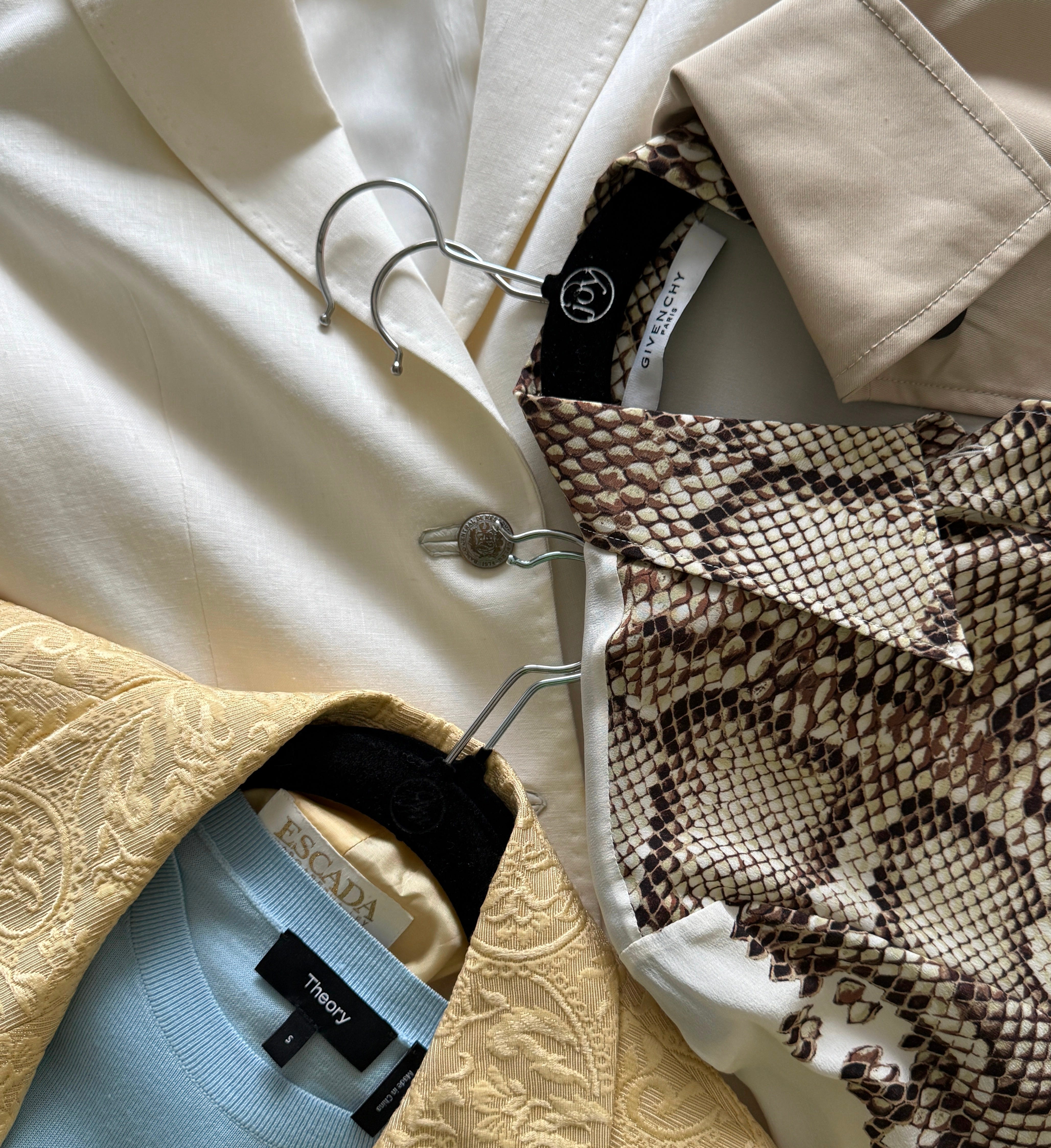
1. Separate Your Wardrobe by Season (Yes, Even for Work)
One of the most common points of friction is treating core work pieces as year-round staples.
Blazers. Trousers. Even certain tops.
In reality, these should be assigned by season in the same way your personal wardrobe already is.
A structured, fully lined blazer that works beautifully in colder months will almost always feel heavy in the summer, even if you cannot immediately articulate why. Continuing to rely on it is less about necessity and more about habit.
A more effective standard:
Winter pieces are structured, lined, and substantial
Summer pieces are lighter, more breathable, and intentionally less rigid
This is not about having more. It is about having the right version.
Checkpoint:
Which pieces are you wearing right now simply because they are “work appropriate,” not because they actually work for the season?
2. Rethink the Blazer (Without Losing Authority)
Blazers are often where the most resistance shows up, because they are tied so closely to how many women define professionalism.
There is a tendency to believe that removing weight or structure somehow removes authority. In practice, the opposite is often true.
A blazer that feels heavy, restrictive, or out of place in the season subtly undermines your presence because you are managing it throughout the day. That friction may not be visible to others, but it is felt by you—and that is enough.
A more elevated approach is to build a summer version of this staple.
What to look for:
Unlined or partially lined construction
Lighter-weight fabrics
Slightly more relaxed or cropped silhouettes
The authority is not in the weight of the garment. It is in the intention behind it.
Checkpoint:
Are your blazers supporting your presence, or are they something you are tolerating?
3. Let Fabric Do the Work (Especially If You Run Warm)
Fabric is often the most overlooked—and most important—variable in warm-weather dressing.
This is where many women unintentionally work against themselves, particularly with synthetic materials that trap heat and retain odor. What feels composed in the morning can feel entirely different by mid-afternoon.
If you run warm, this is not optional.
Prioritize:
Lightweight wool
Cotton blends
Crepe
Silk or silk-infused fabrics
Be cautious with:
Polyester-heavy blends, especially in fitted or layered pieces
Breathable fabrics are not simply a preference in warmer months. They are a requirement for maintaining composure and consistency in how you show up.
Checkpoint:
By midday, do your clothes still feel as polished as they did when you put them on?
4. Balance Structure Strategically
There is a more nuanced layer to this conversation.
If you prefer—or are required—to maintain a more traditional, structured look, the balance has to happen within the outfit. You do not need to abandon the blazer. You need to offset it.
A heavier top layer paired with an equally heavy trouser will always feel like too much in the summer, even if both pieces are technically appropriate.
This is where thoughtful contrast becomes powerful.
Examples of balance:
A classic blazer paired with a lighter, more fluid trouser
A structured top with a breathable, movement-friendly skirt
A polished silhouette executed in softer, more adaptive fabrics
This is what allows you to maintain presence without carrying unnecessary weight.
Checkpoint:
Where can you remove weight from an outfit without removing polish?
5. Expand What “Appropriate” Looks Like
Dresses and skirts are often treated as the obvious solution, but not always embraced at the executive level.
The hesitation is understandable. There is an underlying concern that they may read as less authoritative.
In reality, when chosen with intention, they often do the opposite.
A well-constructed dress in a breathable fabric removes the need for layering entirely, which immediately reduces both physical and visual weight. It allows you to maintain presence without the added effort of managing multiple pieces.
There is also room, depending on your environment, for a more modern interpretation of tailoring.
With intention, you can incorporate:
Sleeveless silhouettes (when the cut remains conservative and refined)
Tailored shorts (when length, fabric, and styling clearly signal structure)
This is not about dressing casually. It is about understanding that professionalism is not defined by how much you cover, but by how considered your choices are.
Checkpoint:
Are you defaulting to coverage out of habit, or making decisions based on impact?
6. Lighten the Foundation (Start with Shoes)
Footwear is often the last thing to shift, and one of the most impactful.
A heavy loafer or structured shoe can feel grounding in colder months, but unnecessarily weighty in the summer. And because it is foundational, it influences the entire tone of the outfit.
Consider replacing with:
A refined, lighter flat
A more open or breathable silhouette (within your office norms)
The goal is not to make the outfit feel relaxed. It is to remove excess.
Checkpoint:
Does your footwear feel aligned with the season, or like a holdover from winter?
The Standard Moving Forward
This is not about dressing down for summer.
It is about recognizing that your environment has changed—and allowing your wardrobe to meet you there with the same level of intention you bring to every other area of your work.
Because this is the real standard.
You should not have to choose between feeling comfortable in your body and feeling credible in your role.
When your wardrobe is aligned with the season you are in, that tension disappears. You move through your day with more clarity, more presence, and far less effort.
And that is where your style begins to work for you, instead of asking something from you.
xx,