

Currently eating a family-size bag of Cheez-Its on my way home, so I figured we might as well get right into the Fashion Week recap.
Fashion Week has a funny way of making fashion feel both more important and less important at the same time. For a few days, New York becomes a place where clothes are the conversation. You are getting dressed for shows, dinners, meetings, presentations, and the possibility that you may end up standing next to someone whose work you have followed for years. There are photographers outside nearly every venue, women arriving in looks pulled straight from the runway, and enough beautiful clothes in one city to make even the most disciplined shopper reconsider her entire closet.
And, honestly, it is fun. It is exciting to walk into a room and know that everyone there cares about what they are wearing. It is fun to see a collection in person, to meet the people behind the clothes, to understand why a designer chose a particular fabric or silhouette, and to see pieces you have only encountered online come to life on an actual woman. We met with Agmes, Lafayette 148, Brunello Cucinelli, FRAME, Anine Bing, Shopbop and others throughout the week, alongside shows, client time, dinners and the general chaos that is Fashion Week.
But after several days of being surrounded by fashion, the thing I came home thinking about most was not fashion at all.
It was personal style.
Because when you spend enough time in an environment where everyone cares about clothes, you start to notice just how differently people interpret the same assignment. There were women dressed head-to-toe in a designer’s collection who looked like the most perfect expression of that designer’s vision. There were women wearing combinations that were clearly the result of a lot of creative thought: unexpected proportions, interesting accessories, pieces that shouldn’t necessarily have worked together but somehow did. And then there were women in denim, a beautiful jacket, great shoes and very little else that called attention to itself who looked every bit as considered as the women in the most elaborate looks.
That was what interested me.
There wasn’t one right way to dress for Fashion Week, just as there isn’t one right way to dress for a board meeting, a client dinner, a school pickup or a Tuesday when you have twelve things on your calendar. The women who looked most at ease were not necessarily the ones who had dressed most dramatically for the occasion. They were the ones who seemed to understand the occasion and then interpreted it through their own point of view.
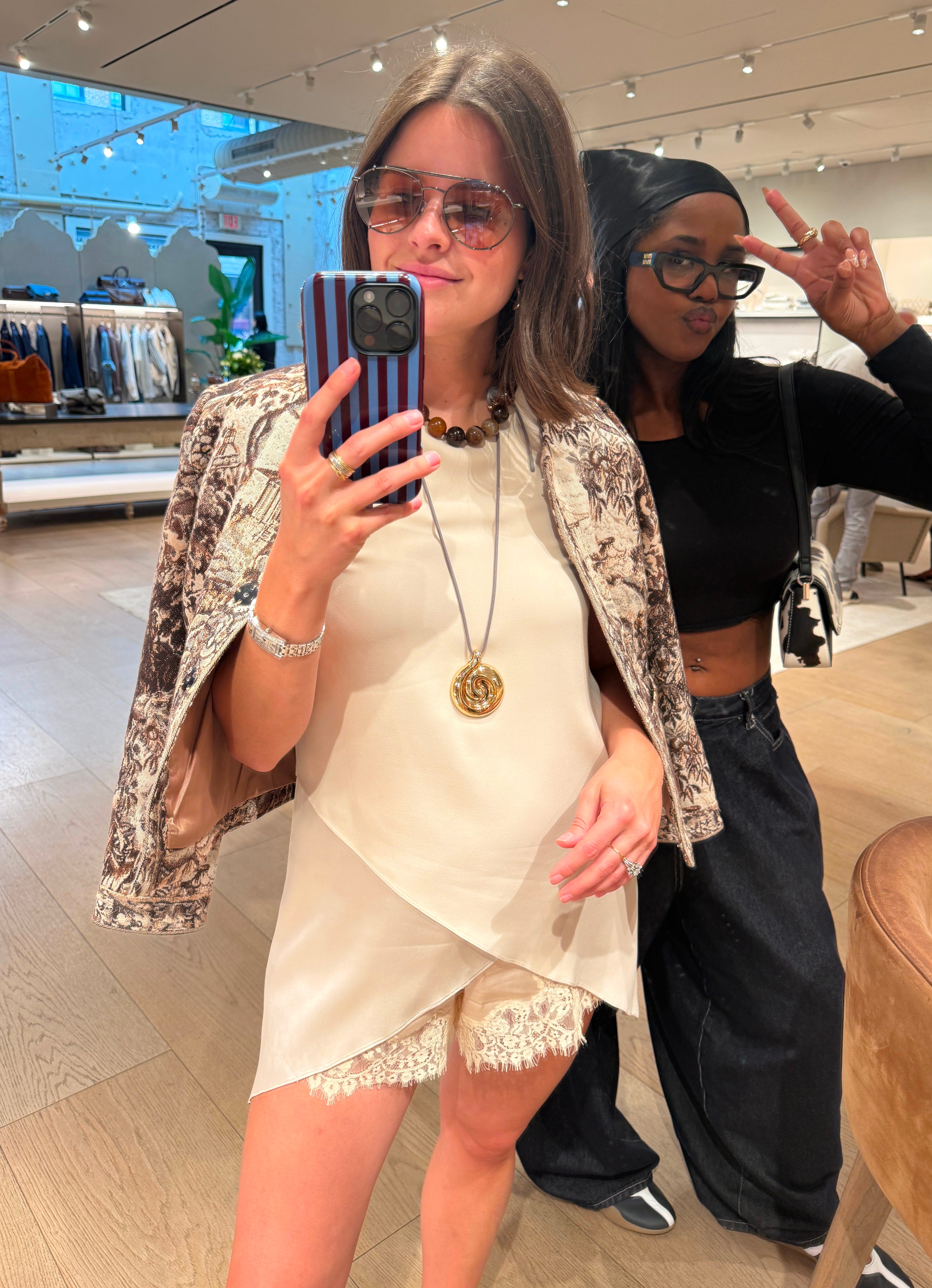
There is a meaningful difference between dressing for the room and dressing as yourself in the room.
I think about this distinction constantly with my clients because so many successful women come to me with the same frustration: they see other women who always seem to look chic and distinct, and they cannot understand how those women seem to know exactly what to put together. They have the clothes. They may even have more than enough clothes. What they don’t always have is a clear sense of how those clothes become theirs.
Fashion Week made that especially visible. You could watch someone take a beautiful piece and wear it exactly as intended, and she looked fantastic. But you could also watch another woman take that same idea and pull it into her own wardrobe, her own proportions, her own preferences, her own life, and suddenly it became something entirely different. That is the part of personal style that cannot be solved by buying the right thing.
The goal is not to have someone look at you and think, She is wearing the newest thing. It is to have them think, That is so her.
That distinction is really at the heart of my work.
My job is often described in terms of editing and styling, which is accurate, but the actual work is much more about translation. I am taking a woman’s existing wardrobe, her lifestyle, her ambitions, her proportions and her preferences and translating all of that into clothes that feel coherent. Sometimes that means introducing something new. Often it means seeing something she already owns differently. The magic is in the combination, because a wardrobe becomes personal in the space between the individual pieces.
That is why getting to spend time with designers and brands throughout Fashion Week was such an important part of the experience for me. As much as I believe in the individuality of the woman wearing the clothes, there also has to be something worth working with. Designers and creative directors ultimately give us the raw materials.
Seeing those materials up close is different from seeing them on a website. You notice the weight of a fabric, the construction of a jacket, the way a trouser falls, the thought behind a silhouette. You hear about the woman the designer had in mind when they created it. And when you work with brands that understand that the modern woman needs her clothes to do more than look beautiful, the connection to my own work becomes particularly clear.
The women I work with are not getting dressed for a photograph. They are getting dressed for a life that moves quickly. They need a jacket that can work with denim and a trouser, a dress that can survive a full day of meetings and still feel right at dinner, shoes they can actually walk in, fabrics that hold up, and pieces that can be interpreted in more than one way. They need quality, but they also need versatility. They need clothes that can keep pace with them.
And this week, perhaps unexpectedly, reminded me that functionality and fun are not opposites.
Some of my clients, especially those who have spent years telling me they hate shopping, found themselves genuinely excited by Fashion Week. They wanted to touch the fabrics, hear the stories behind the collections, try things on, and understand what made a piece special. It was a different way of experiencing clothes, and I loved watching the shift from “I don’t care about fashion” to “Wait, this is actually really interesting.”
That is something I want to hold onto.
Because my work is strategic. There are edits and measurements and wardrobe gaps and shopping lists and lookbooks and deadlines. There is a reason behind what we buy and a reason behind where it lives in the wardrobe. But the strategy is there to make the actual experience of getting dressed easier, not to remove the joy from it.
I was reminded of that in a particularly literal way this week.
I packed for Fashion Week in about ten minutes.
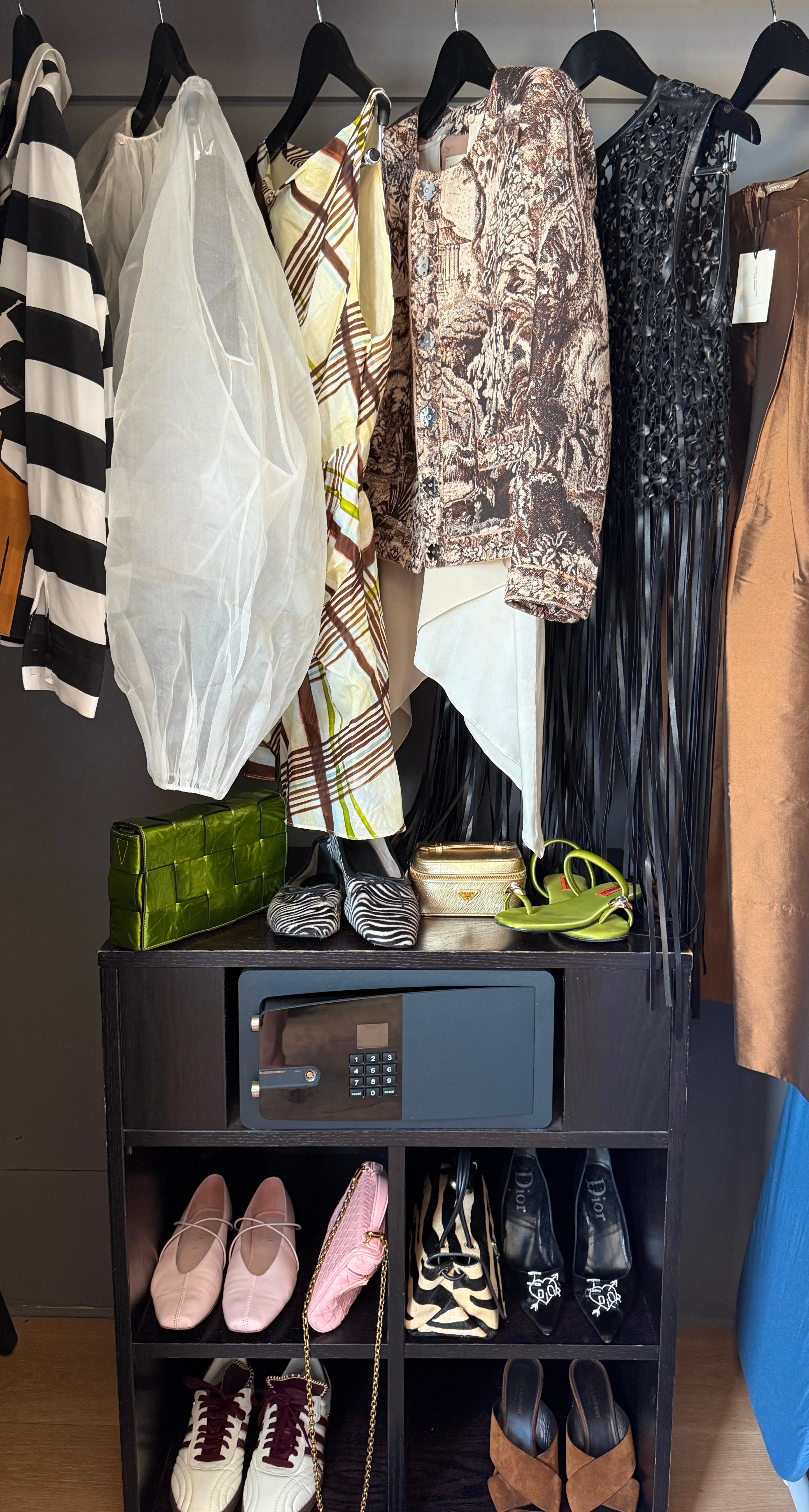
Not because I wasn’t thinking about what I would wear. I had been thinking about it. I knew the events on my calendar, knew the pieces I wanted to bring, and could see the outfits in my head before I put them in the suitcase. I wore every outfit I had planned, repeated pieces, and never once had the feeling that I had brought an entire closet with me and somehow had nothing to wear.
For me, that was one of the best parts of the week.
That is the kind of wardrobe I want for my clients. Not necessarily a wardrobe that looks like Fashion Week, but one that gives them the same feeling: that they know what they are doing. That they can walk into a room and feel appropriately dressed without feeling like they dressed for the room. That they can take something beautiful and make it feel like theirs. That their clothes reflect the woman they have become rather than a version of themselves they think they are supposed to be.
Fashion Week was, of course, a wonderful reminder of how much talent, creativity and craftsmanship exists in fashion. I came home with new ideas, new appreciation for the brands I already work with, and a long list of things I want to keep an eye on for my clients.
The most compelling style I saw was not the style that followed the room perfectly. It was the style that had a point of view.
And perhaps that is the real luxury of personal style: not having an endless supply of beautiful things, but knowing exactly which beautiful things feel like you, knowing how to put them together, and being able to walk into almost any room without losing yourself in the process.
xx,