


Every summer, there’s a quiet resignation that happens in women’s wardrobes.
Shorts become the category that many opt out of entirely, not because they don’t want the ease or practicality, but because the experience of finding a pair that actually works feels disproportionately frustrating. They’re too tight through the thigh, too boxy at the waist, too short to feel polished, or too long to feel intentional. The result is a category that feels inherently unflattering, and over time, many women simply decide: shorts aren’t for me.
What’s worth understanding, however, is that this conclusion is rarely about the body. It’s about the design.
Shorts are one of the most inconsistently executed categories in women’s clothing. Without a clear framework for what to look for, it’s easy to try on pair after pair that reinforces the same outcome. But when you understand the structural elements that make shorts work, the entire experience shifts, from trial and error to discernment.
What Actually Makes Shorts Work
When shorts feel flattering, it’s not accidental. There are a few specific structural decisions that determine whether they elongate, balance, and refine the body, or work against it.
1. Length defines the line
Where a short hits on the leg will determine whether it elongates or widens the silhouette. When a hemline cuts across the widest part of the thigh, it draws the eye outward, creating unnecessary visual width. Allowing the short to fall slightly below that point—where the leg begins to narrow again—creates a longer, cleaner line and immediately shifts the proportion of the body.
2. Pleats create function, not just detail
For women who carry more width through the hips or prefer ease through the midsection, pleating becomes essential. Double pleated shorts create space and movement while maintaining structure at the waist, allowing the fabric to drape rather than pull. The result is a silhouette that feels both polished and comfortable. Single pleats can work, but tend to be more effective on straighter frames where less volume is required.
3. Shape matters more than size
This is particularly relevant in denim. Many styles are cut straight through the leg, which is why they cling, ride up, and require constant adjustment. An A-line shape—subtly wider at the leg opening than at the waist—allows the short to sit on the body rather than grip it. This creates ease, movement, and a far more intentional silhouette.
How to Source Shorts That Actually Work
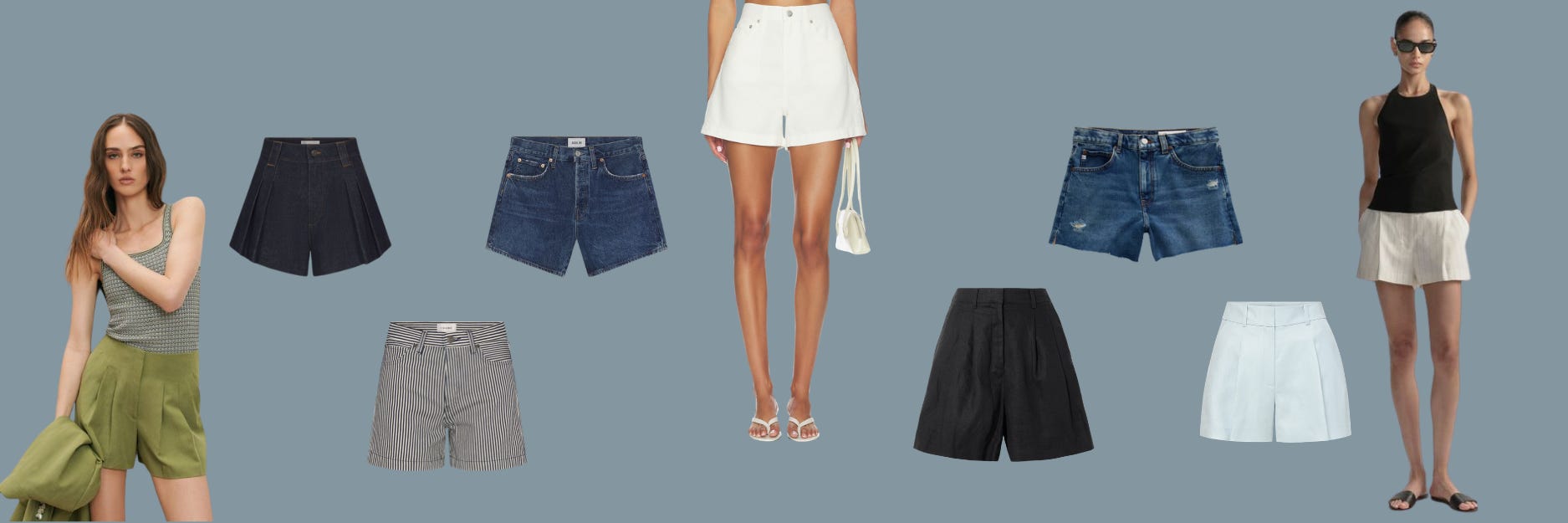
Once you begin filtering with these principles in mind, sourcing becomes significantly more efficient. You’re no longer approaching the category with hesitation, you’re identifying pieces that are designed to work from the outset.
This season, the strongest options lean tailored, structured, and slightly longer in length. They mirror the role trousers play in other parts of the year, offering both ease and polish without compromise.
Tailored & Linen Foundations: These function as your summer equivalent of a trouser, anchoring the wardrobe with structure while still feeling seasonal.
Everyday Structured Shorts: These offer versatility for day-to-day wear without defaulting to overly casual.
Denim That Holds Its Shape: Each of these leans into that A-line structure, eliminating the need for constant adjustment while maintaining a clean line.
How to Style Shorts So They Feel Intentional
Sourcing is only one part of the equation. Integration—how these pieces are styled—is what ultimately determines whether they feel aligned with the rest of your wardrobe.
The most effective approach is to treat shorts with the same level of intention as any other foundational piece.
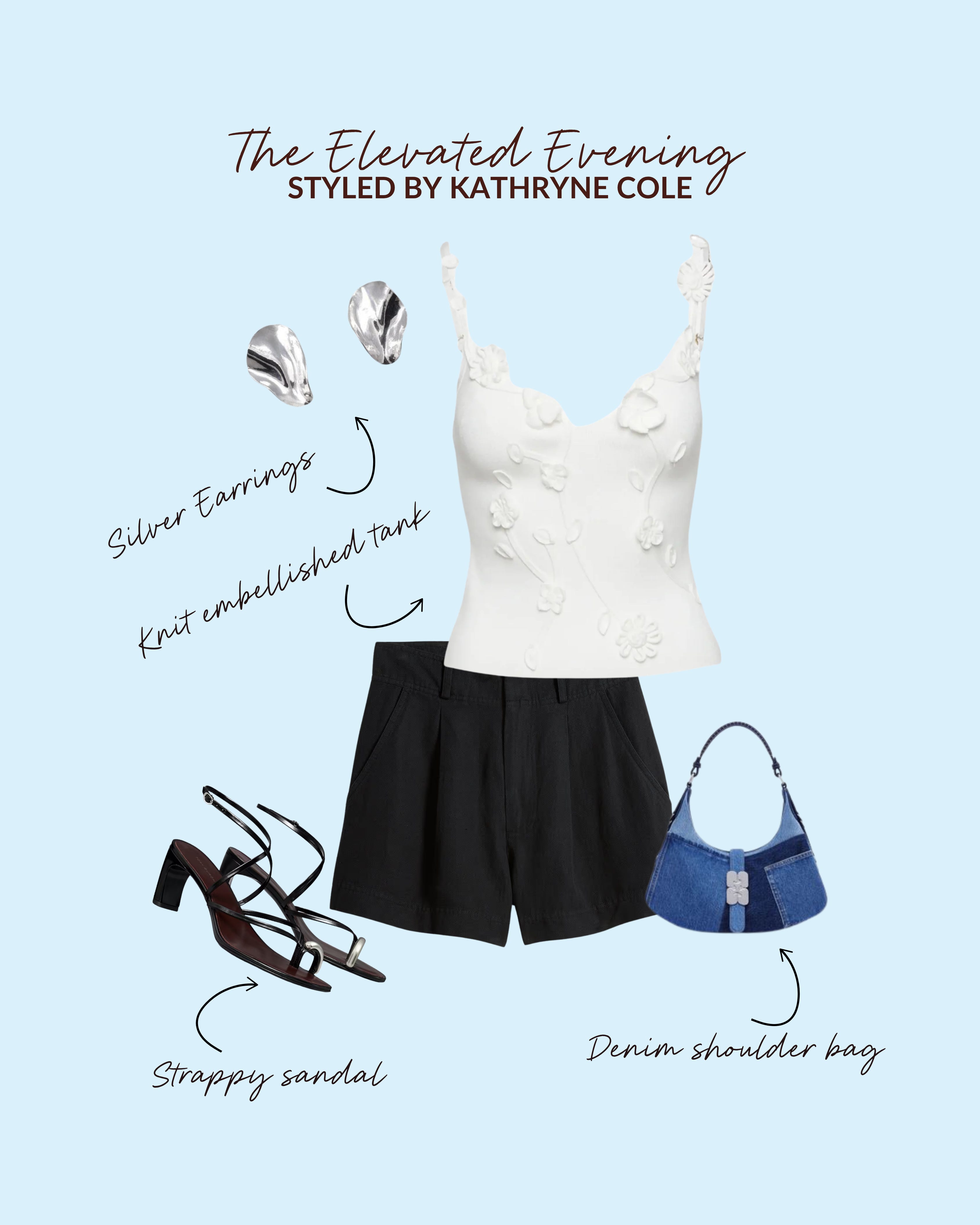
1. The Elevated Evening
Tailored short + structured tank or tee + leather heel + intentional jewelry
The success of this formula lies in the weight of the pieces. The top and accessories must hold presence.
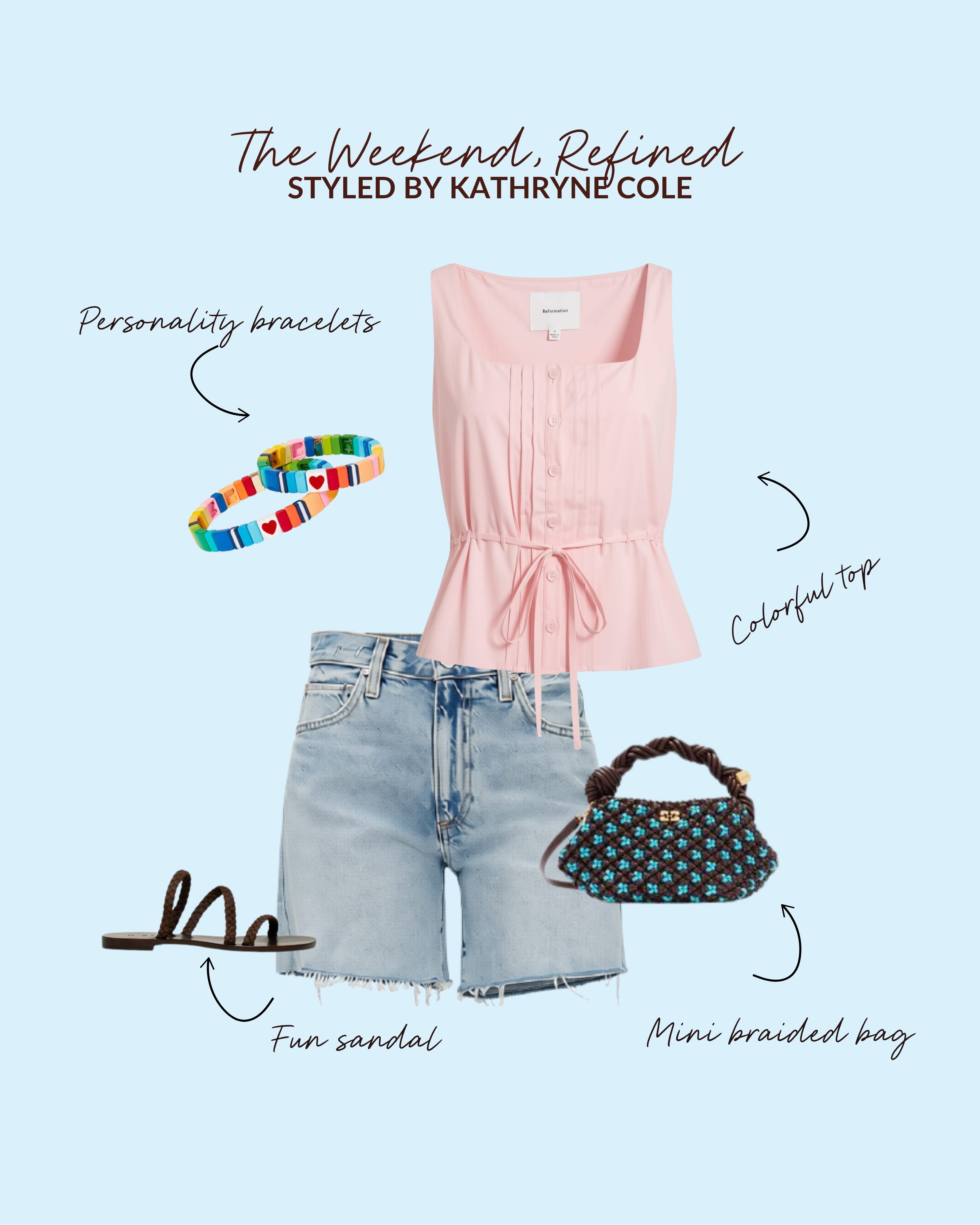
2. The Weekend, Refined
Denim short + cotton top + flat sandal + textured bag
Effortless only reads as intentional when the pieces are doing their job.
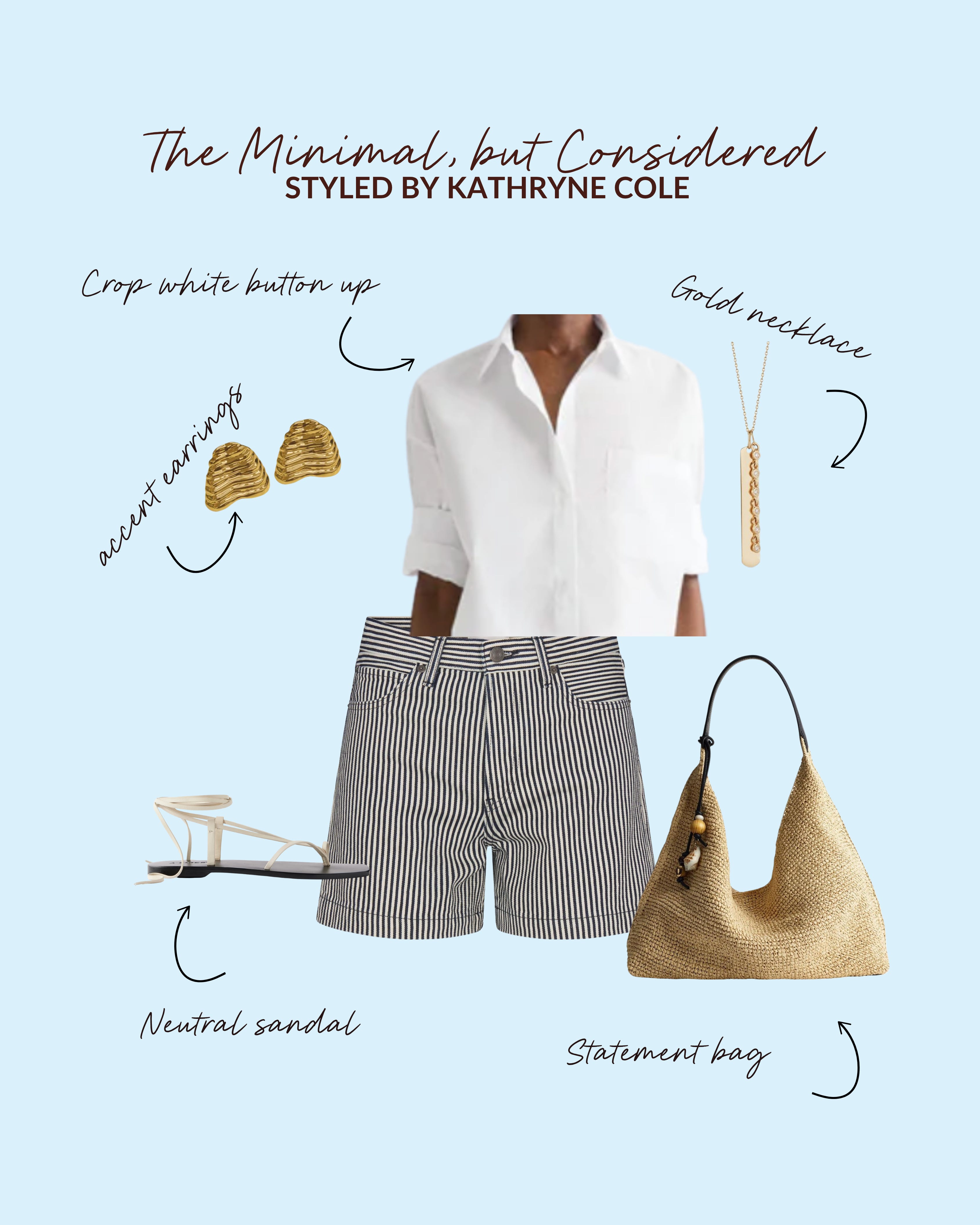
3. The Minimal, but Considered
Structure short + button down + simple sandal + sculptural accessory
The print & texture are doing the job here, bringing interest to an otherwise casual base.
If you’ve written off shorts, that instinct likely came from experience and it’s understandable. But it’s also incomplete.
When you move from trying to make shorts work to understanding how they are designed to function, the category opens up in a way that feels both practical and refined.
Shorts stop feeling like a compromise for warm weather. They become a tool, one that, when sourced correctly, supports the same level of confidence and clarity as the rest of your wardrobe.
xx,

The right earrings shift how the whole formula lands. So glad to be in the edit, Kathryne!