


September is one of those months when getting dressed can feel harder than it should.
The morning calls for a jacket. By noon, you’re wondering why you put one on. Your fall wardrobe is calling your name, but the weather is still flirting with summer. And suddenly, the clothes you happily wore a few weeks ago feel either too light or completely wrong for the season.
The answer is not to start dressing for fall overnight. It is to start transitioning the weight of your wardrobe.
Nailing transitional-season dressing feels like an art, but the truth is that it is a strategy. The trick is learning to combine pieces from different seasons so your outfit lands somewhere in between: substantial enough to feel appropriate for fall, but light enough to handle the unexpected 75-degree afternoon.
Think of it as creating tension between fabric weights.
A wool trouser with a lighter knit. A silk skirt with a substantial cardigan. A fall dress with a short-sleeved jacket. Instead of asking, Is this a summer outfit or a fall outfit?, ask, Where is the weight in this outfit, and where can I keep it light?
That shift is what makes a wardrobe more functional. You are no longer waiting for the weather to cooperate before you can wear your clothes. You are learning how to make the pieces you already own work together.
And once you understand the formula, September dressing becomes much less complicated.
The Formulas: Pair Light With Substantial
The easiest way to approach transitional dressing is to avoid building an outfit entirely from one seasonal category.
If everything is lightweight, the outfit can feel summery even when September has arrived. If everything is heavy, you may look seasonally appropriate but spend the afternoon overheating.
Instead, pair one lighter-weight element with one more substantial element.
This can happen through fabric, layering, or even the accessories you choose.
A silk skirt becomes more fall-appropriate with a cashmere sweater. A wool trouser feels less heavy with a spring-weight cardigan. A fall dress can work beautifully in warmer weather when the jacket layered over it is short-sleeved and lightweight.
The goal isn’t to disguise the fact that the weather is still warm. It is to introduce just enough fall into the outfit that it feels intentional.
Here are three ways to do it.
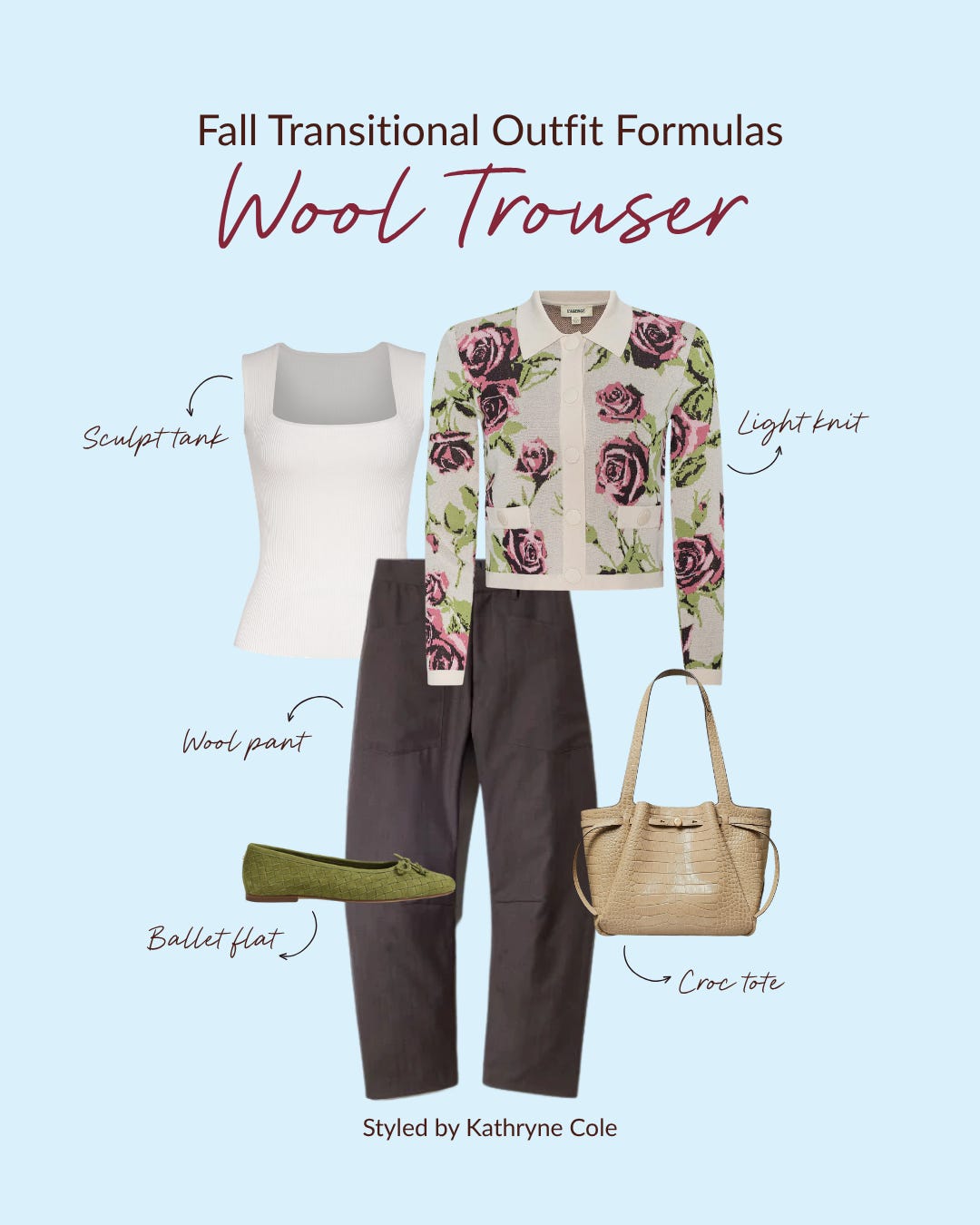
01. Wool Trouser + Light Knit + Flat
A wool trouser is one of the easiest ways to bring fall into your wardrobe without committing to a full fall outfit.
Rather than pairing it with another heavy piece, balance the weight with a lighter knit. A spring-weight cardigan or short-sleeved sweater keeps the top half of the outfit breathable, while the trouser gives the look the structure and substance that makes it feel distinctly September.
Finish it with a flat rather than a boot, and suddenly you have an outfit that can move through a warm afternoon without looking like you are still waiting for summer to end.
The formula: substantial bottom + lighter top + transitional shoe.
This is also a useful shopping strategy. If you already have several wool trousers in your fall wardrobe, you don’t necessarily need another pair of pants. Look instead for the lighter-weight pieces that will allow you to wear them earlier in the season.
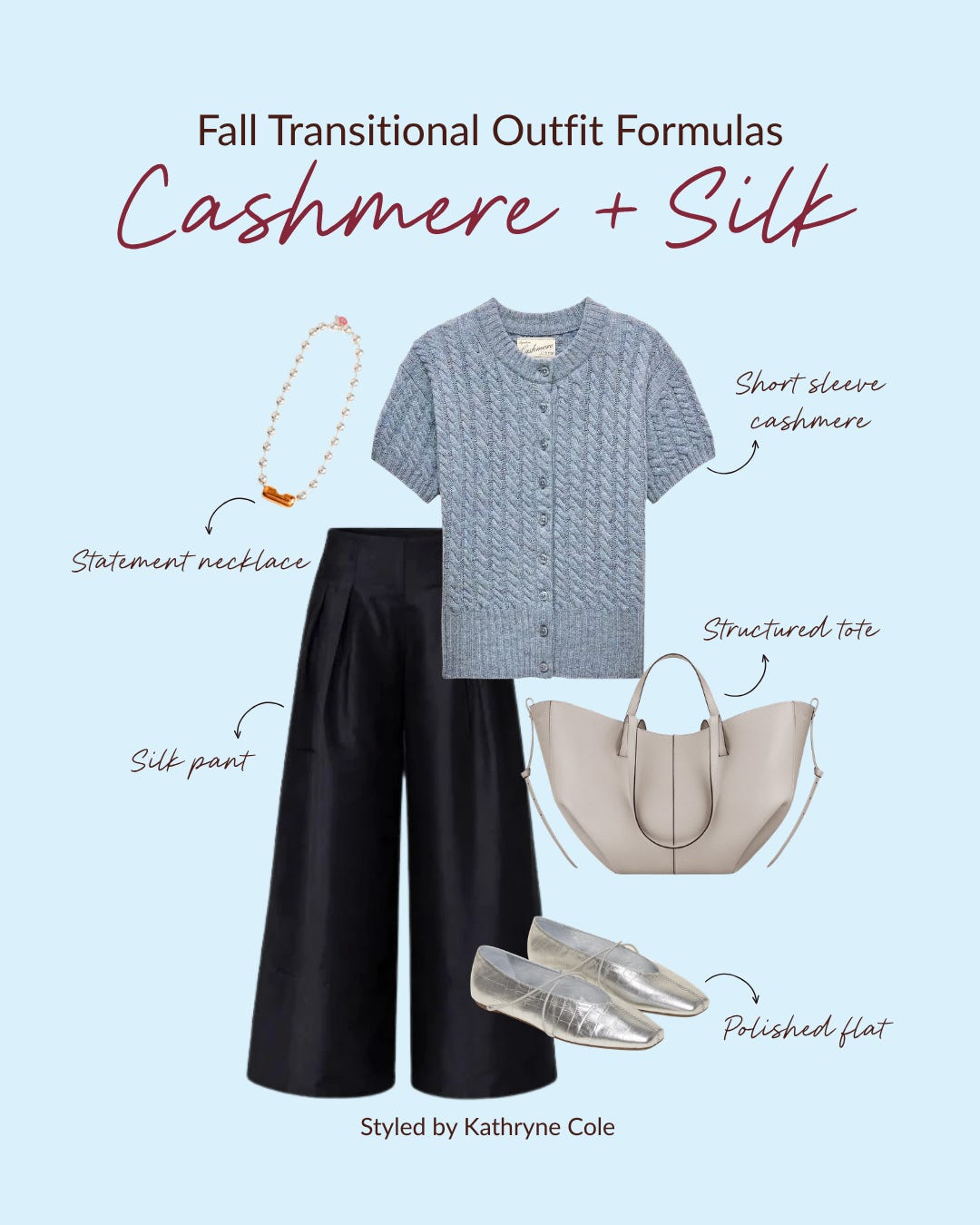
02. Short-Sleeve Cashmere + Silk Bottom + Flat
This is where fabric mixing becomes particularly useful.
Silk & taffeta have a natural lightness, but pairing them with a short-sleeved cashmere sweater changes the entire read of the outfit. The silk skirt or trouser keeps the look fluid and breathable, while cashmere introduces enough texture and warmth to move it into fall.
And because both pieces are relatively refined, the result feels polished rather than pieced together.
This is one of my favorite ways to dress for September because it demonstrates an important wardrobe principle: seasonality does not have to come from color.
You don’t need to reach for burgundy, chocolate brown, or rust to make an outfit feel like fall. Sometimes the feeling comes from texture and weight alone.
Add a simple flat and structured bag, and the outfit is ready for work without feeling like you dressed for a completely different climate.
The formula: lightweight bottom + refined knit + simple flat.
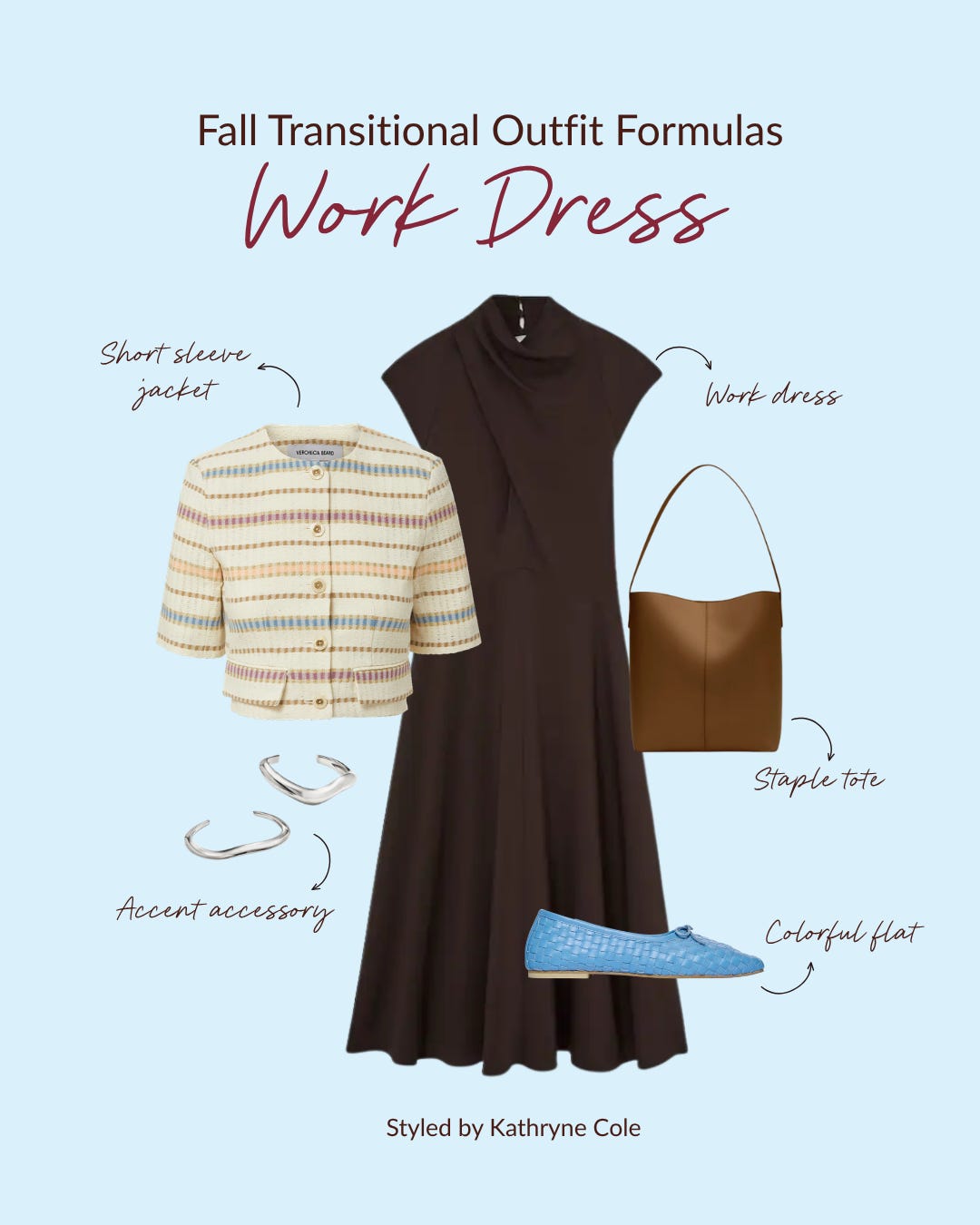
03. Fall Work Dress + Short-Sleeve Jacket + Printed Flat
A dress is another place where transitional dressing can go wrong.
A heavier fall dress can feel premature when worn with a full blazer and closed-toe shoe, particularly when temperatures are still climbing into the 70s. But you can soften the weight of the dress by changing the layers around it.
A short-sleeved jacket gives you the structure of a blazer without the insulation. A printed flat keeps the outfit feeling lighter and introduces visual interest without making it feel summery.
You don’t always need to change the main garment. Sometimes changing the shoe, bag, or third layer is enough to shift how the entire outfit reads.
The formula: fall-weight dress + lighter third layer + transitional accessory.
This is the kind of outfit that makes a wardrobe feel significantly larger than it actually is. The dress doesn’t only belong to “fall.” It can begin working in September because you’ve changed the supporting pieces around it.
The Bigger Wardrobe Lesson
The mistake I see women make with transitional dressing is treating September like a completely new season that requires a completely new wardrobe. It doesn’t.
What you need is a wardrobe that can move between seasons, which means having enough variation in fabric weight and enough versatility in your pieces to create those combinations.
Before you shop for something new this September, look at what you already own and ask:
What feels too summery to wear right now?
What feels too heavy to wear right now?
Then look for the missing bridge.
Maybe your silk skirts need a few lightweight knits. Maybe your fall trousers need softer, less structured tops. Maybe your dresses need a lighter third layer. Maybe your summer flats are actually the key to making your fall wardrobe wearable earlier.
That is the difference between having more clothes and having a more functional wardrobe. The goal is not to have an outfit for every possible temperature. That would be impossible, and frankly, exhausting. The goal is to understand your wardrobe well enough that when the forecast changes, you know how to adjust.
And that is when getting dressed starts to feel effortless: not because the weather finally decided what season it is, but because you know how to dress for the space in between.
xx,
