

Every spring, the fashion industry announces the same thing: the colors of the season. New palettes are published. Trend reports circulate. Retail floors suddenly flood with a very specific set of shades.
This exact conversation came up with a client last week as we were planning her spring wardrobe. And the hesitation I hear most often isn’t actually about color. It’s this: “I love this… I just don’t know if it works with everything I already have.”
It’s a valid concern, and one most women have never been taught how to solve.
Because here’s the quiet truth most stylists understand the colors of the season rarely change that much. If you place last year’s spring palette next to this year’s, the overlap is almost identical. The shift isn’t in the color itself, it’s in the tone.
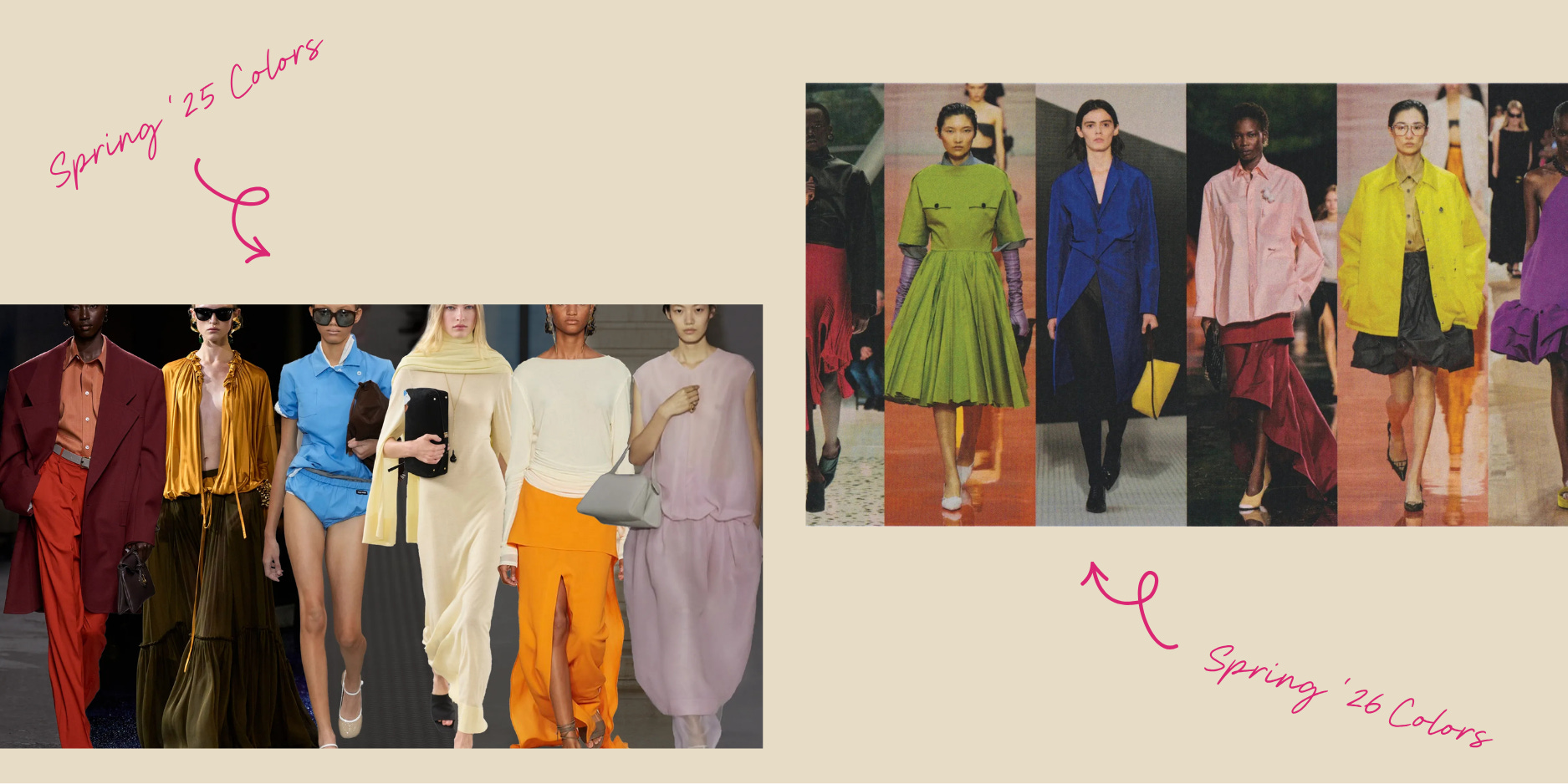
And once you see that, the question changes.
You stop asking, “What’s new?”
And start asking something far more useful: “How do I make what I already own feel current?”
Because staying current doesn’t require replacing your wardrobe every season. It requires knowing how to shift the palette you already have.
When you do that well, your wardrobe evolves without starting over. The change is subtle, but impactful. You don’t look like you’re following trends, you look like you have a point of view.
Because color itself isn’t the problem. Integration is.
You can buy all the “right” seasonal shades and still end up with a wardrobe that doesn’t work, pieces that feel exciting on their own, but never quite come together when you’re getting dressed.
That’s the risk of shopping trends without a palette. So before you lean into what’s “in” this season, the real question becomes: How do you make sure it actually works with what you already own?
Here’s how to approach it.
The Palette Check: How to Know Before You Buy
This is the exact filter I use with clients when we’re deciding whether a new color actually earns its place.
1. What does this color pair with immediately?
If you can’t think of at least 3–5 items in your closet that this would work with, it’s not ready to be added yet.
Not in theory, specifically. Which trousers? Which blazer? Which shoes? If the answer isn’t clear, the piece will sit.
2. Is this expanding my palette or competing with it?
A good addition should feel like a natural extension of what you already own.
If your wardrobe leans cool and muted, a hyper-saturated warm tone might feel disconnected. That doesn’t mean you can’t wear it, but it does mean you’ll have to work harder to integrate it.
Effort is often where pieces fail.
3. Can I wear this in at least two different color stories?
The most valuable pieces don’t live in one outfit, they move across your wardrobe.
A great color should be able to show up in multiple combinations. If it only works one way, it’s not pulling its weight.
4. Does this create contrast or cohesion, and do I need more of that?
Some wardrobes lack interest because everything is too similar. Others feel chaotic because nothing relates.
Before adding a new color, ask what your wardrobe is missing. Do you need a point of contrast to wake things up? Or do you need something that ties everything together?
Buy accordingly.
5. Would I still buy this if it wasn’t “in” this season?
This is the simplest question, and often the most telling. If the answer is no, you’re likely reacting to the trend—not making a strategic addition.
And that’s usually where regret lives.
Where trends do become useful
Once you have that filter in place, trends stop being overwhelming and start becoming incredibly useful.
Now instead of asking “Should I buy this color?”, you’re asking: “How can I use this season to refine what I already have?”
That’s where combinations come in. This spring, there are a few that feel particularly elevated, not because they’re trendy, but because they integrate beautifully into a well-built wardrobe.
Blue and green feels like a more sophisticated evolution of the pink and green we’ve seen for years. It’s rich, layered, and quietly bold.
Fuchsia and lavender brings a softer, more refined energy than the high-contrast pink and orange combinations of past seasons.
And orange with blue—still one of the most striking pairings—manages to feel both bold and classic when grounded properly.
These aren’t rules. They’re direction.
They give you a way to experiment within your wardrobe, instead of stepping outside of it.
The real goal
The goal was never to keep up with seasonal colors.
It’s to build a wardrobe where new colors can enter seamlessly, where everything already works well enough together that a single addition makes the entire closet feel refreshed.
And once you experience that, the idea of rebuilding your wardrobe every spring starts to feel… unnecessary.
Because you’re no longer chasing what’s new. You’re refining what already works.
xx,