


There is a point in building a wardrobe where buying more stops working.
Not because you don’t have enough, but because what you have isn’t holding.
It doesn’t hold its shape. It doesn’t hold its finish. It doesn’t hold its place in your rotation once the initial excitement wears off. And over time, that creates a wardrobe that feels full, but not reliable.
This is where investment shifts from indulgence to strategy.
Because true investment pieces don’t just add to your wardrobe, they stabilize it. They become the items you default to without second-guessing. The pieces that carry the weight of your outfits, that perform under real-life conditions, and that continue to feel relevant long after the moment of purchase.
And that level of consistency is rarely accidental. It comes from brands that understand construction, proportion, and restraint at a higher level.
These are the ones I return to, not frequently, but intentionally.
Jewelry: fewer pieces, stronger presence
Jewelry is often overfilled and underutilized. Drawers of options, but very few pieces that actually define how you show up.
Investment jewelry shifts that dynamic. It replaces excess with clarity, pieces that can stand alone, layer with ease, and maintain their presence over time.
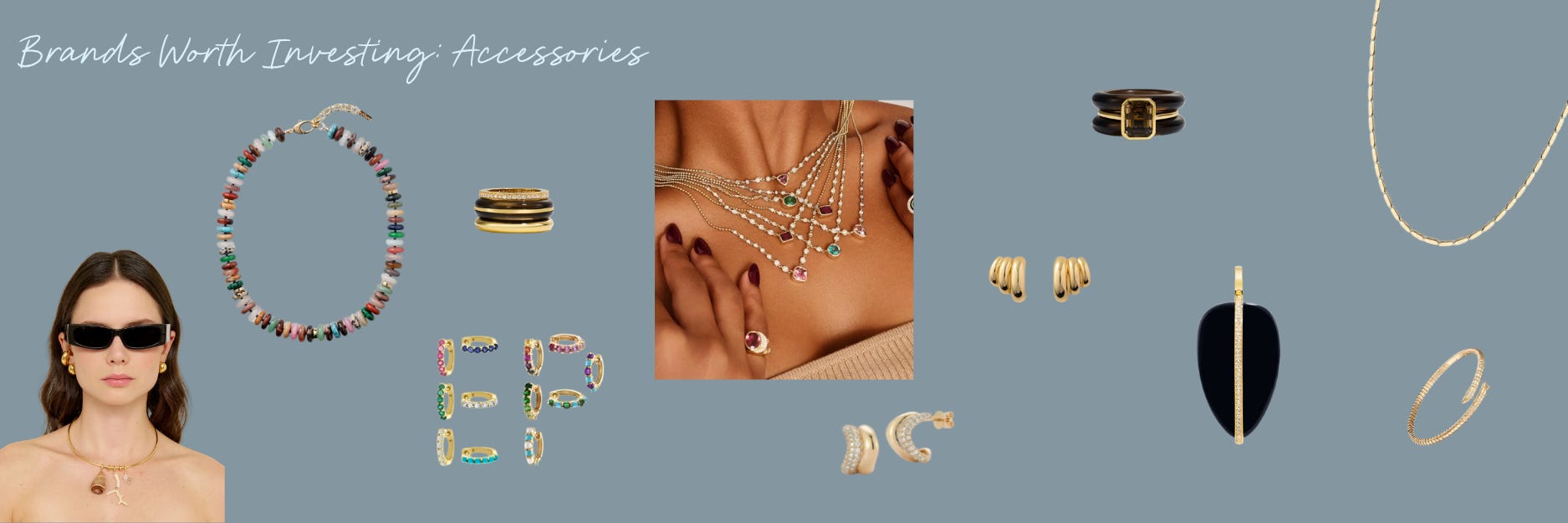
Eliou brings in something most investment categories lack: personality that still feels intentional. These are not everyday neutrals and that’s the point. They introduce color, texture, and play in a way that can completely shift the tone of an outfit. When done well, one piece replaces the need for multiple accessories.
Dana Rebecca is the foundation. Clean chains, refined staples, and pieces that integrate without effort. This is where you invest when you want jewelry to become part of your uniform, something you wear daily without having to reconsider.
By Pariah sits in that rare space between statement and timelessness. Sculptural, weighty, and incredibly composed. These are the pieces that anchor a look on their own, eliminating the need for layering entirely.
Eden Presley adds dimension to this category. There’s a distinct design language here, slightly more expressive, but still controlled. It’s where you go when you want jewelry to feel styled, not just added.
The through-line here is intention. Investment jewelry should reduce the need for more, not create it.
Shoes: where performance defines value
Shoes are one of the fastest ways to understand whether an investment was worth it.
Because you don’t evaluate them in a mirror—you evaluate them over the course of a full day. Movement, comfort, durability, and how they hold their structure all become part of the equation.
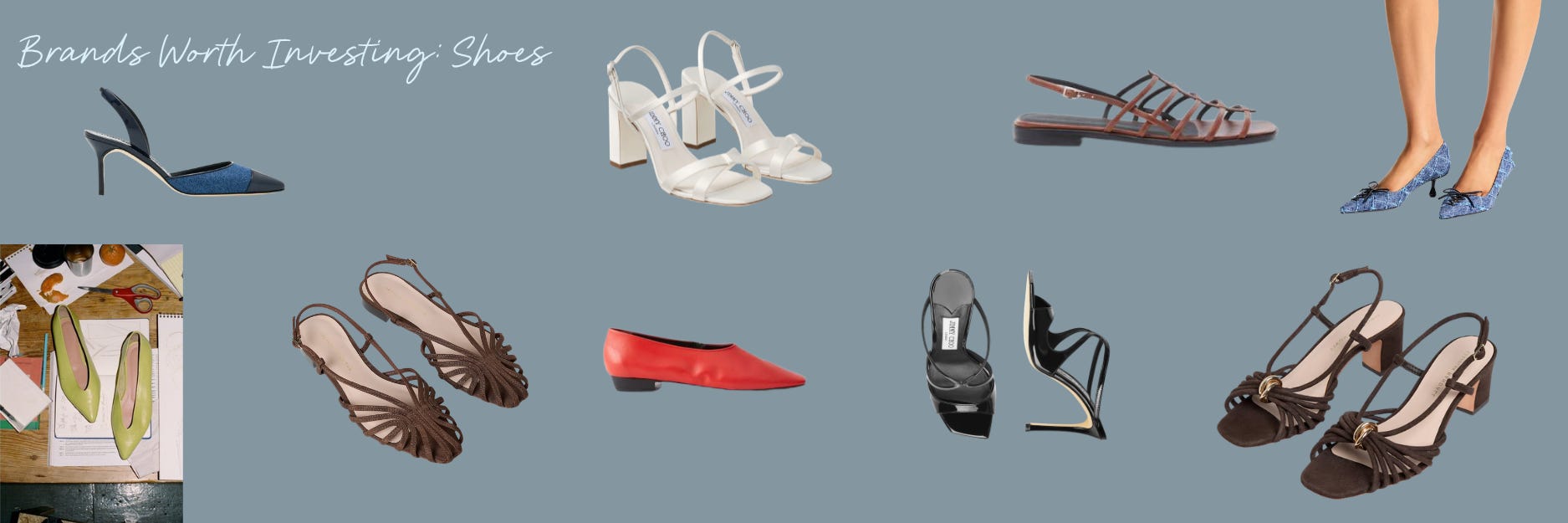
M.Gemi represents one of the clearest intersections of function and refinement. These are shoes designed for real movement—commutes, travel, full days on your feet, without sacrificing aesthetic. This is where practicality becomes elevated.
Rachel Comey, particularly in flats, offers something more directional. The silhouettes are considered, slightly unexpected, and strong enough to influence the rest of the outfit. They don’t just support the look, they shape it.
Manolo Blahnik remains one of the most consistent investments in classic heels. This is where longevity becomes tangible. The kind of shoe you resole, rewear, and rely on across years of events, work moments, and transitions.
Loeffler Randall fills a very specific need: polished flats for women who are constantly in motion. There’s a softness to the design, but it never collapses into casual. It maintains structure while still being wearable.
Jimmy Choo operates at the intersection of engineering and aesthetics. These are heels that understand proportion, balance, and wearability at a higher level. They are designed to be worn, not just admired.
At this level, shoes are not about variety. They are about reliability under pressure.
Handbags: where structure becomes identity
Handbags are often the most visible indicator of investment, and the most misunderstood.
Because the value isn’t just in the material. It’s in how the bag holds its shape over time, how it interacts with the rest of your wardrobe, and how consistently it shows up in your rotation.
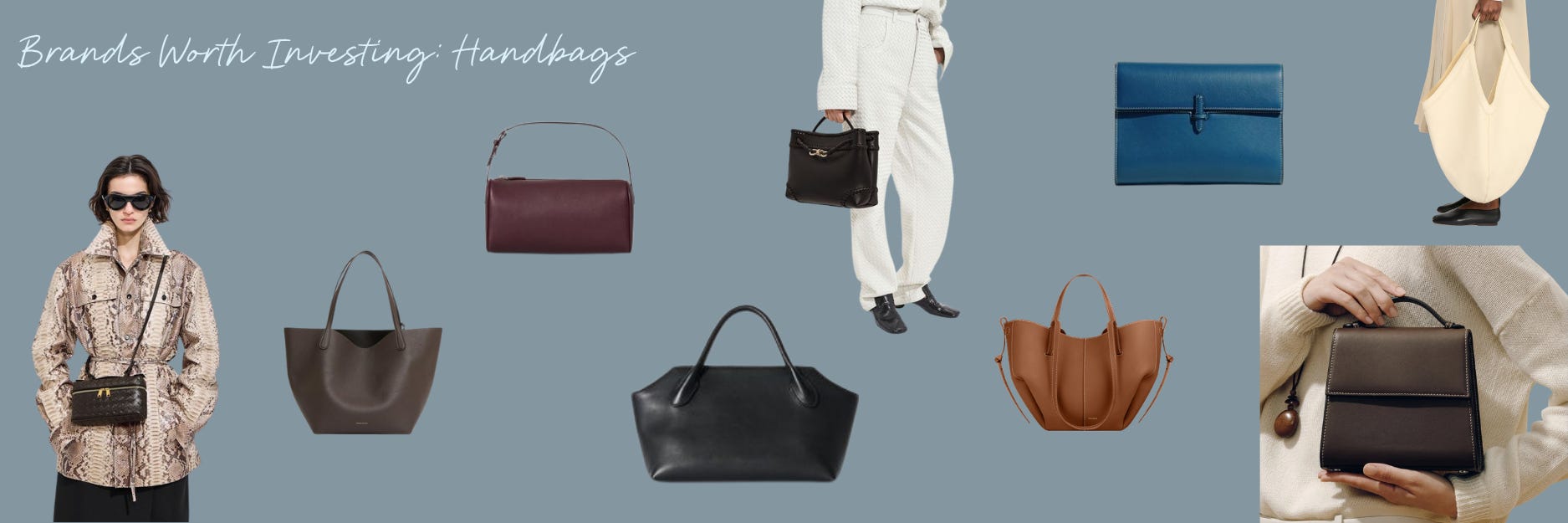
Hunting Season is the definition of restraint done well. Clean lines, strong silhouettes, and a complete absence of excess. These are bags that don’t shift with trends because they were never built around them.
Bottega Veneta continues to justify its investment position through consistency. The craftsmanship is evident, the materials hold, and the design language remains recognizable without feeling repetitive. It’s one of the few designer houses where the value extends beyond the logo.
The Row exists in a category of its own. The design is intentionally quiet, but the quality is unmistakable. These are pieces that become part of your wardrobe at a foundational level, less about statement, more about permanence.
Mansur Gavriel delivers where many brands fall short: work bags that actually withstand daily use. The structure holds, the scale makes sense, and the functionality supports real routines.
Polène bridges versatility in a way that feels modern. Sculptural enough to feel styled, but practical enough to carry through multiple contexts, work, travel, everyday life. It’s one of the strongest mid-tier investment options for that reason.
The common thread is structure. A bag should maintain its identity—regardless of how often you use it.
Investment is not about elevating everything.
It’s about identifying the categories that carry the most weight in your wardrobe—and ensuring those pieces can keep up.
When done well, investment reduces noise. It eliminates the constant need to replace, rethink, or rebuild. It allows your wardrobe to function with more ease, more consistency, and more clarity.
And over time, that is what creates a sense of personal style that feels both effortless and intentional.
Not because you’re buying more, but because what you’re buying is finally holding its place.
xx,
