


If I had a dollar for every time a client told me she didn’t know which boots to wear with which outfit come winter, well, you know the saying.
And I understand the confusion. Between ankle boots, mid-calf boots, knee-highs, pointed toes, square toes, block heels, suede, leather, and every color imaginable, what should be a fairly straightforward purchase has become an overwhelming exercise in decision-making.
But here’s what I want you to understand: you don’t need a boot for every outfit. You need a few boots that serve different purposes in your wardrobe.
When I’m building a client’s wardrobe, I don’t start by asking which boots are trending. I look at what she’s actually wearing. Does she live in trousers? Favor dresses? Need something that can take her from the office to dinner? The answers tell me far more about which boots she needs than any trend report could.
And while there are certainly a few silhouettes I’m particularly drawn to this season, I believe a well-rounded boot wardrobe comes down to three distinct roles: the polished boot, the workhorse, and the personality piece.
Let’s get into it.
01. The Polished Boot
The knee-high that makes getting dressed feel effortless.
If there’s one boot silhouette I consistently come back to, it’s a beautiful, structured knee-high. There’s an elegance to this style that few other boots can replicate, particularly when paired with dresses and skirts.
This season, I’m favoring a sleeker silhouette. Think a shaft that sits just beneath the knee, holds its shape, and follows the line of the leg without feeling overly tight. I’ve always preferred this to a slouchier boot because it creates a clean, uninterrupted line that balances beautifully against more voluminous clothing.
Think a fluid midi skirt with a structured leather boot beneath it, a chunky knit dress with a slim knee-high, or a shorter skirt with an oversized blazer. The boot provides the structure that keeps the rest of the outfit feeling intentional.
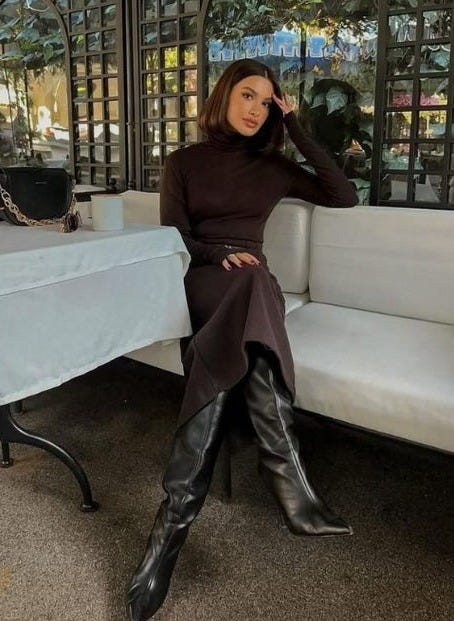
As for the heel, that’s entirely up to you. A flat knee-high can be every bit as sophisticated as a heeled version, provided the shape is right.
Where I’d have a little fun: I’m particularly drawn to subtle architectural details this season. A metal-tipped toe, an interesting cone heel, or an asymmetrical shaft can make an otherwise understated boot feel special. If you prefer a flat, look for a slightly asymmetrical top line. It’s a small detail that can create a beautiful, leg-lengthening effect.
My styling advice: Pay attention to where the hem of your skirt meets the boot. For midi lengths, I generally prefer the boot to disappear beneath the hem rather than leave an awkward strip of leg exposed. It creates a longer, more cohesive silhouette, and it’s one of those small adjustments that can make an outfit feel considerably more polished.
02. The Workhorse Boot
The mid-calf that does the heavy lifting.
Now, this is where I tend to lose people. The mid-calf boot can feel a little intimidating, but once you understand how to wear it, it’s arguably one of the most useful shoes in a fall and winter wardrobe.
First, an important distinction: I’m not talking about the ankle boots we all wore with skinny jeans for the better part of a decade. Those served their purpose, but this is a different silhouette.
What I’m looking for now is a shaft that extends well above the ankle but stops several inches below the knee. That extra height makes all the difference, particularly when styling wider-leg trousers or longer skirts.
And here’s where I’d make the decision based on what you actually wear.
If you live in trousers and denim, I’d steer you toward a slim, sock-style boot. The close-fitting shaft slips easily beneath pants, creating a seamless line without excess material bunching around the ankle. It’s particularly useful with tailored trousers, straight-leg denim, and any pant where you want the shoe to feel like a natural extension of the outfit.
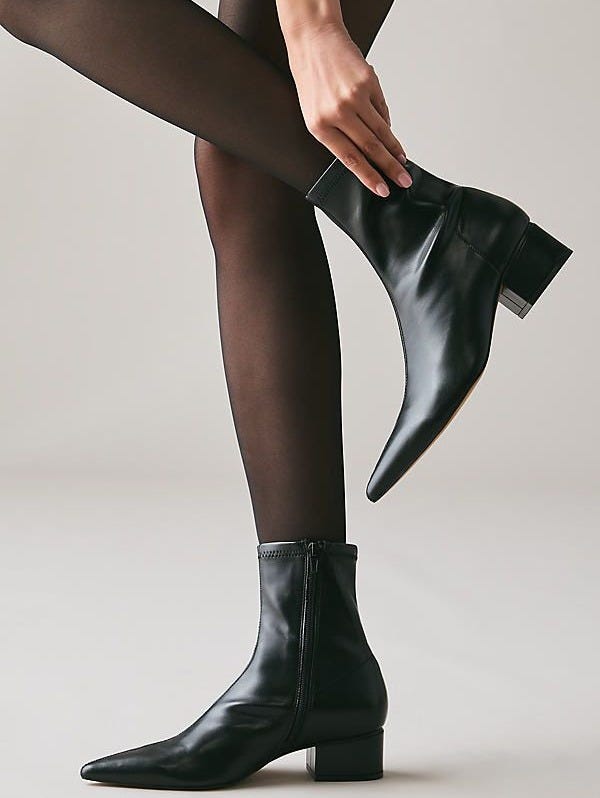
If you favor skirts, dresses, or wider-leg denim, I’d consider a wider, more structured shaft. I love the way this silhouette creates contrast against a feminine skirt or a fluid dress. It also works beautifully beneath a wider pant leg, where the additional structure gives the shoe some presence.
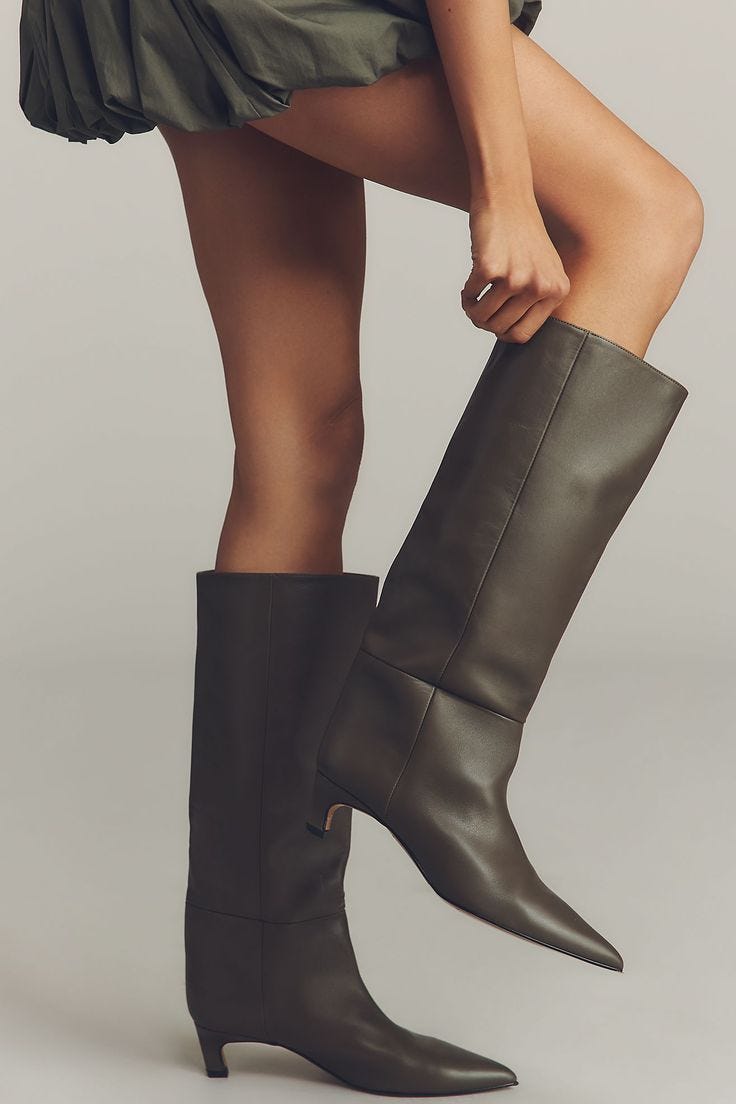
The trick with a wider mid-calf boot is proportion. Rather than trying to make the boot disappear, allow its shape to become part of the outfit. A shorter skirt creates a beautiful contrast with the substantial shaft, while a longer hem can fall over the boot for a more relaxed, editorial feel.
This is the boot I find myself reaching for when I want an outfit to feel current without looking particularly trendy. It doesn’t demand attention, but it quietly changes the entire proportion of a look.
My styling advice: If you’re investing in only one mid-calf boot, let your pants make the decision for you. The wrong shaft width can create unnecessary bulk beneath a trouser, while the right one makes getting dressed remarkably easy. And always try the boots on with the actual pants you intend to wear them with. The relationship between the hem and the boot matters just as much as the boot itself.
03. The Personality Boot
The casual boot that makes an outfit feel like you.
Not every boot in your wardrobe needs to be understated. In fact, I’d argue that having one pair with a little personality is what makes the rest of your wardrobe more interesting.
Enter the buckle boot.
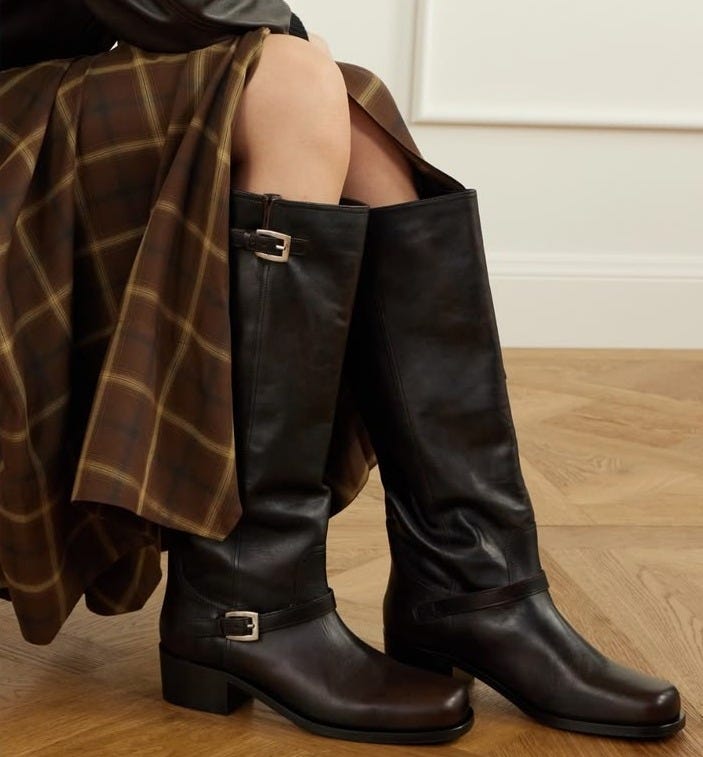
Think of this as the more refined evolution of the combat boot. It has that same slightly utilitarian attitude, but with a more considered silhouette and hardware that feels like a design detail rather than an afterthought.
I love this style because it brings an unexpected edge to otherwise polished pieces. A feminine skirt suddenly feels a little less precious. A simple jeans-and-sweater combination becomes more interesting. Even a tailored coat takes on a different personality when paired with a substantial buckle boot.
It’s the shoe that helps bridge the gap between a wardrobe that’s beautifully put together and one that actually feels personal.
Now, if buckles and hardware aren’t your thing, don’t force it. A simple Western-inspired or even a structured classic boot can play exactly the same role. Look for a subtle Western toe, a beautiful stacked heel, or understated stitching rather than anything overly literal.
The point isn’t to own a buckle boot or a cowboy boot specifically. It’s to have one casual boot that introduces a little contrast, texture, or attitude into your wardrobe.
My styling advice: Let the boot be the interesting part of an otherwise simple outfit. You don’t need to pair a Western boot with Western-inspired clothing or a buckle boot with something equally edgy. In fact, I often prefer the opposite. That contrast is what makes an outfit feel personal rather than overly styled.
A Note on Color: You Don’t Have to Default to Black
Once you’ve identified the silhouettes your wardrobe needs, the next question is inevitably color.
Black and brown are obvious starting points, and for good reason. They’re versatile, timeless, and easy to integrate into most wardrobes. But I also think we’re sometimes too quick to assume that a neutral boot needs to be one or the other.
Some of my favorite boots live somewhere in between.
Take a deep, almost-black mocha. It has the richness of black but the softness of brown, which makes it incredibly useful for wardrobes that move between the two. It can ground a tonal chocolate outfit just as beautifully as it can complement charcoal trousers or a black wool coat.
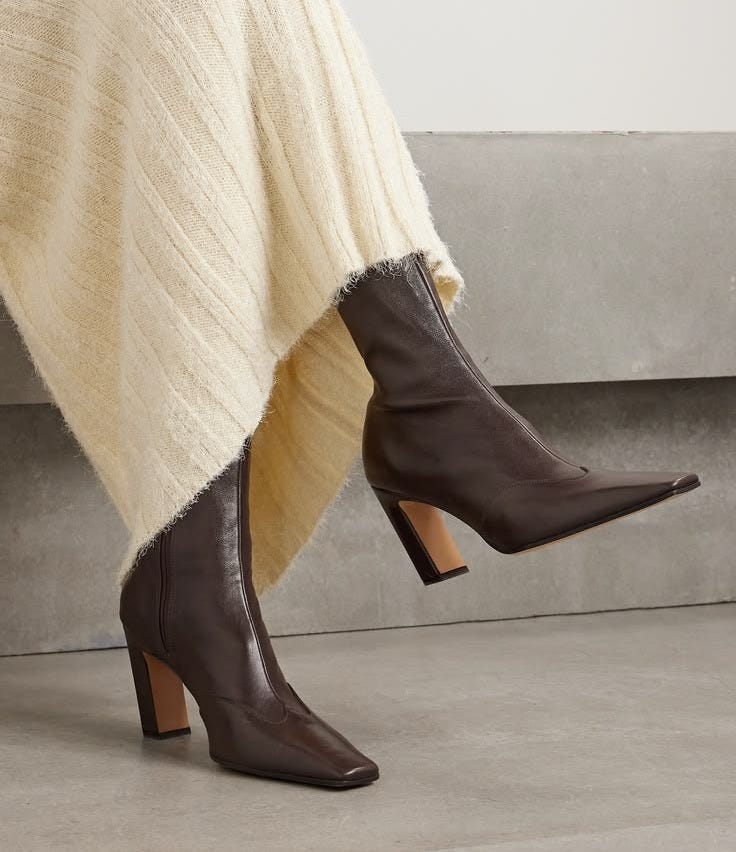
I’m equally drawn to a rich merlot or oxblood. These shades introduce color without demanding that the rest of your outfit revolve around them. They pair beautifully with chocolate, navy, gray, cream, and black, often making a simple outfit feel more considered.
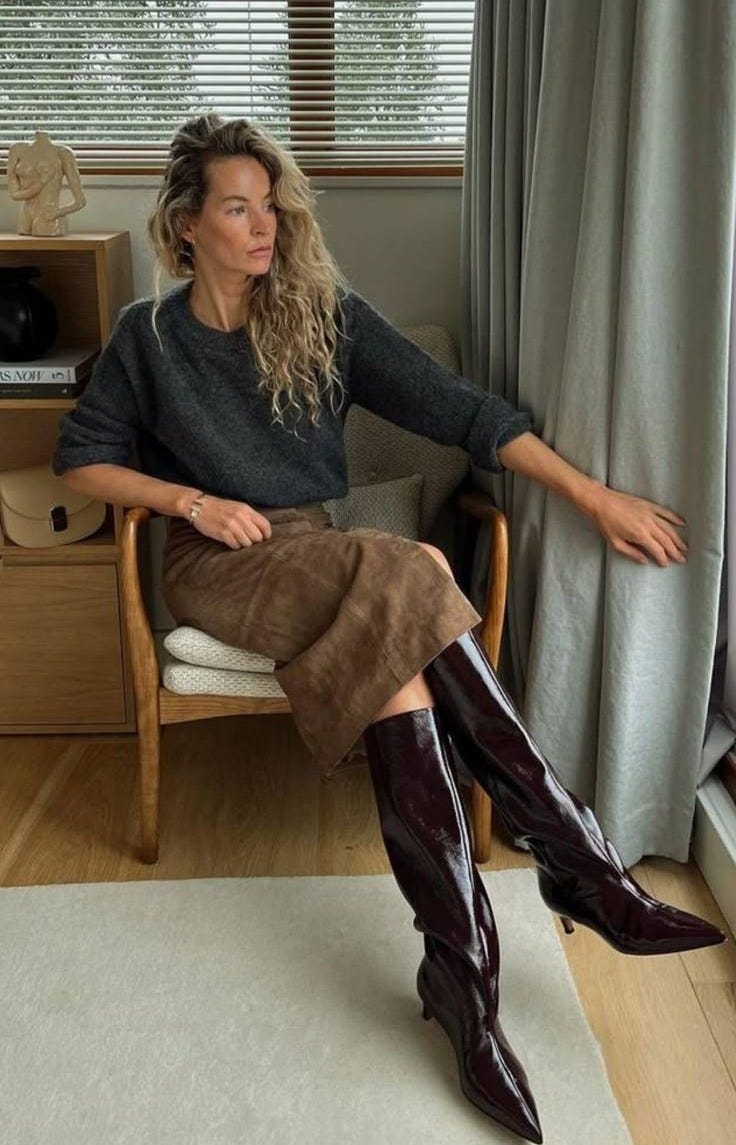
What I love about these deeper, less obvious neutrals is that they add dimension. They don’t necessarily read as a statement color, but they make an outfit feel more interesting than the expected choice.
And while we’re here, a quick word on texture. Smooth leather will generally give you a sharper, more structured look, while suede brings softness and richness, particularly to tonal outfits. Patent leather, on the other hand, creates contrast and a little drama.
None is inherently better than the other. The question is what your wardrobe needs more of.
If you’re purchasing your first pair in a particular silhouette, I’d prioritize the material you’ll realistically wear and maintain. A beautiful suede boot isn’t much of an investment if you’re constantly afraid to take it outside.
So, Which Boot Should You Actually Buy?
Here’s where I’d encourage you to resist the temptation to add all three to your cart.
Before buying another pair of boots, look at the outfits you struggle to finish. Are you constantly changing shoes when you put on a dress? Do your trousers never seem to sit quite right over your boots? Or does your winter wardrobe simply feel a little too predictable?
Those are three very different problems, and they require three different solutions.
If dresses and skirts are your sticking point, start with the polished knee-high. If you’re in trousers most days and need a reliable everyday option, the mid-calf workhorse will likely earn the most wears. And if your wardrobe is functional but missing a little personality, consider a boot that introduces something unexpected.
You may need all three. You may only need one. And if you already own boots that serve these purposes beautifully, there’s no reason to replace them simply because a new silhouette has caught everyone’s attention.
That’s the difference between collecting shoes and building a wardrobe.
The goal isn’t to have a boot for every possible outfit. It’s to understand which boots make the outfits you already love easier to wear.
And once you know that, shopping for them becomes considerably simpler.
xx,
