


Okay, hot take: half the dress codes showing up on holiday invitations are made up. And I think that’s a wonderful thing.
Cocktail, black tie, business casual. These are established dress codes with relatively understood expectations. But festive chic? Holiday glamour? Creative cocktail? Come dressed to sparkle? Somewhere along the way, hosts started inventing their own language for what they wanted their guests to wear, leaving everyone else to figure out what, exactly, that means.
Here’s the part I love: when a dress code is open to interpretation, you have the freedom to interpret it.
I realize that might sound like the opposite of helpful advice. After all, the ambiguity is precisely what makes getting dressed for these occasions so frustrating. Nobody wants to arrive in jeans when everyone else is wearing cocktail dresses, or spend an evening in a gown surrounded by people in sweaters.
But I think we’ve become so accustomed to looking for permission when it comes to personal style that we’ve forgotten how much authority we actually have over what we wear.
An invitation is not an instruction manual. It’s a collection of clues. And once you understand how to read those clues, you can stop second-guessing every outfit and start making decisions with confidence.
So, before the holiday invitations begin piling up, consider this your guide to decoding the dress code, interpreting it through your own personal style, and getting dressed without the unnecessary drama.
First, Understand What the Invitation Is Actually Telling You
When I’m interpreting a dress code, I’m looking at three things: the level of formality, the setting, and how much personality the host is inviting you to bring.
Formality establishes the foundation. Cocktail, semi-formal, and black tie tell us how dressed up the occasion is expected to be. This is where I begin, because it determines the general category of clothing we’re working with.
The setting provides context. A holiday dinner at someone’s home is different from a cocktail reception at a private club. A celebration at the office is different from an evening event at a hotel ballroom. The venue, time of day, and host often tell you just as much as the stated dress code.
Personality is where you get to have fun. Words like festive, creative, or themed are usually an invitation to bring something more interesting to the occasion. Perhaps that’s a color, a texture, an unexpected accessory, or a more expressive silhouette.
Here’s the distinction I want you to remember: formality tells you how dressed up to be. The descriptive words tell you how much creative freedom you have within that level of formality.
Once you understand that, even the most unnecessarily elaborate invitation becomes easier to interpret.
The Holiday Dress Codes, Decoded
So you’re not rushing last minute: Your pre-holiday shopping list.
01. Holiday Casual
My interpretation: One elevated piece, one relaxed piece.
Of all the dress codes, I find casual to be the most frustrating. Casual according to whom? Because my version of casual might look very different from yours, and neither is necessarily wrong.
When an invitation says holiday casual, I interpret it as an opportunity to create a polished outfit without looking particularly formal.
My formula is simple: pair one elevated piece with one casual piece, then finish the outfit intentionally.
Think tailored trousers with a beautiful sweater rather than a structured jacket. A dress with a flat knee-high boot rather than a heel. Or a great pair of dark, clean denim with an interesting top and a beautifully cut blazer.
The key is that the casual element should feel like a styling decision, not an afterthought.
And please, don’t forget the accessories. A beautiful belt, considered jewelry, and an appropriate bag can be the difference between an outfit that looks like you happened to get dressed and one that feels thoughtfully put together.
Where women get it wrong: Taking the word casual too literally. An invitation to dress casually is not necessarily an invitation to wear your everyday uniform. The occasion still deserves a little intention.
02. Festive Attire
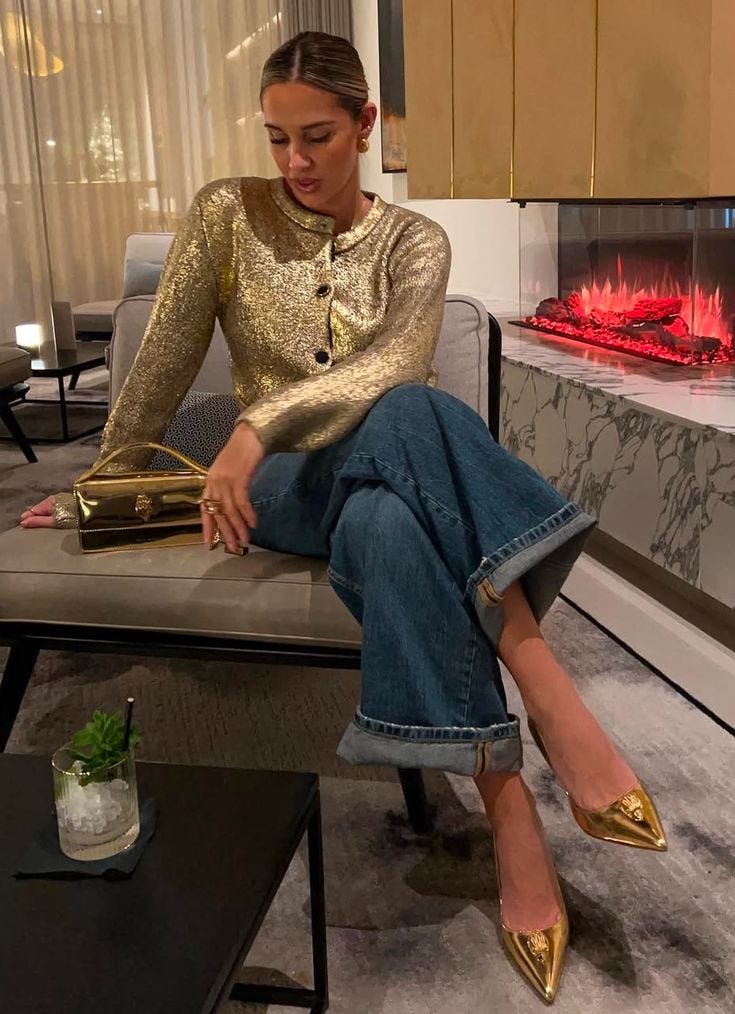
My interpretation: Dress for the occasion, then give the outfit a little personality.
When a host uses words like festive, creative, or themed, I generally take that as an invitation to be a little more expressive than the occasion might traditionally call for.
Think about it this way: the host has spent time considering the flowers, the tablescape, the lighting, and the atmosphere. They’re inviting their guests to participate in creating that atmosphere, too.
If the invitation says festive cocktail, start with cocktail attire and introduce something celebratory. If it says creative black tie, maintain the formality of black tie but consider a more interesting color, silhouette, or accessory.
For holiday parties, that might mean rich burgundy, metallics, tartan, velvet, sequins, or even a beautiful piece of statement jewelry.
But festive does not automatically mean sparkle, nor does it mean you need to dress like a Christmas ornament.
A beautifully tailored burgundy suit can feel every bit as festive as a sequin dress. So can a simple black dress with an extraordinary pair of earrings.
What matters is that you’ve brought a little more personality to the occasion.
Where women get it wrong: Confusing festive with a requirement to wear every holiday reference at once. You don’t need red, green, velvet, and sequins in the same outfit to communicate that you’re celebrating.
03. Cocktail Attire
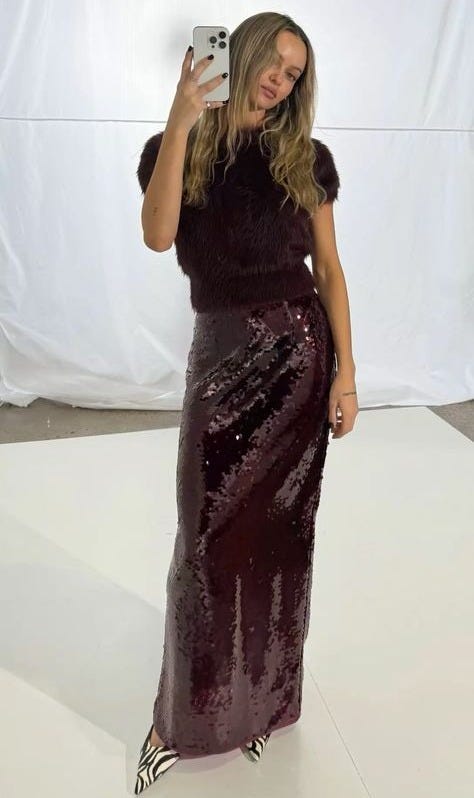
My interpretation: An occasion to dress up, not necessarily an occasion to wear a dress.
Cocktail is one of the more established dress codes, yet I find women still tend to overcomplicate it.
Traditionally, cocktail attire falls between everyday dress and formal evening-wear. It’s polished, elevated, and appropriate for a celebration, without requiring a floor-length gown.
And while the name might suggest otherwise, a cocktail dress is not your only option.
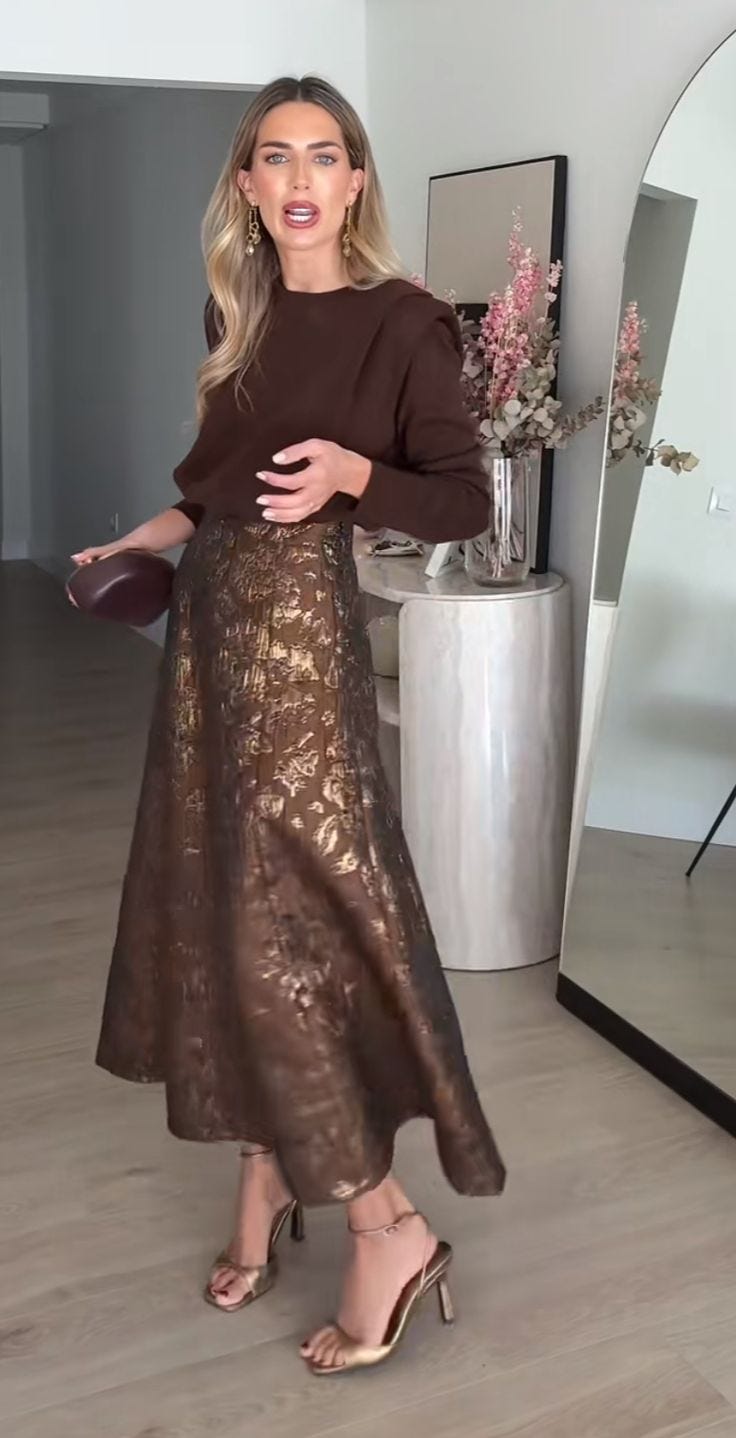
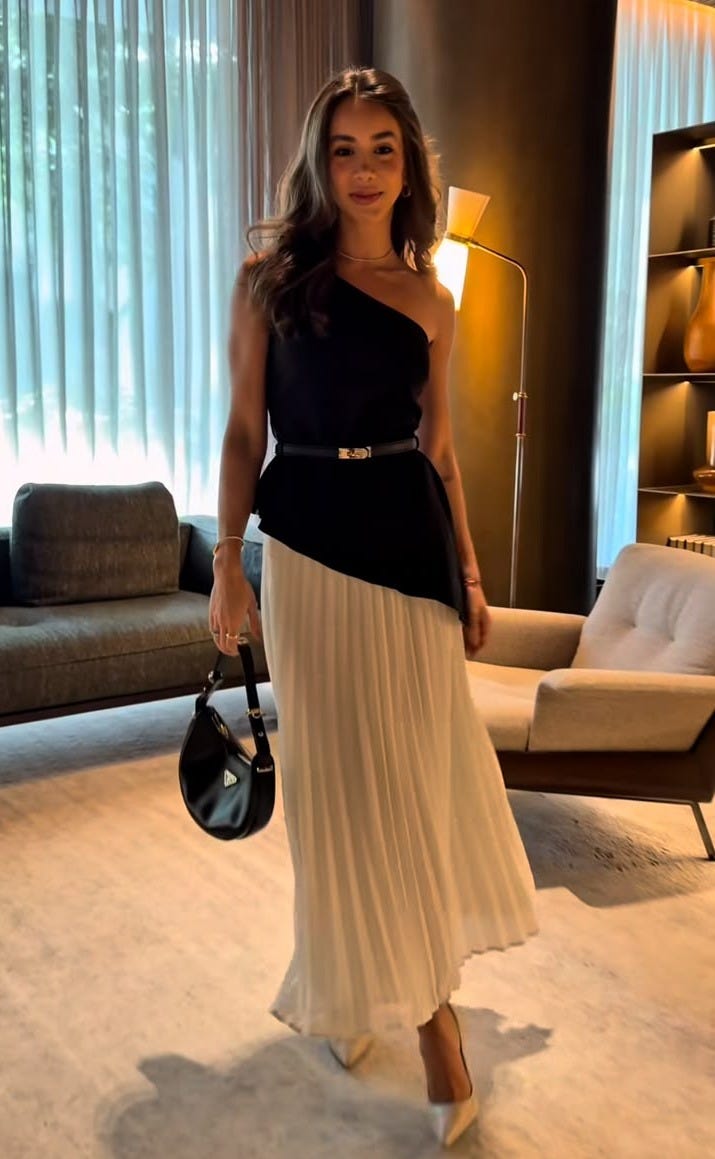
A beautiful midi dress, a tailored suit in an evening-appropriate fabric, or a sophisticated pairing of separates can all work. I particularly love a silk blouse with a long skirt, or a beautifully tailored trouser with a structured, interesting top.
What makes an outfit cocktail-appropriate is often less about the individual garments and more about how the entire look comes together.
Fabric, fit, accessories, and proportion all contribute to the level of formality. A simple black dress can read completely differently with flat boots and an everyday tote than it does with an elegant heel, evening bag, and considered jewelry.
This is where understanding how to style what you already own becomes far more valuable than buying something new for every invitation.
Where women get it wrong: Assuming cocktail requires a particular hemline, a high heel, or an entirely new dress. It doesn’t. The outfit simply needs to feel appropriate for an elevated social occasion.
04. Black Tie Optional
My interpretation: Pretend the word optional isn’t there.
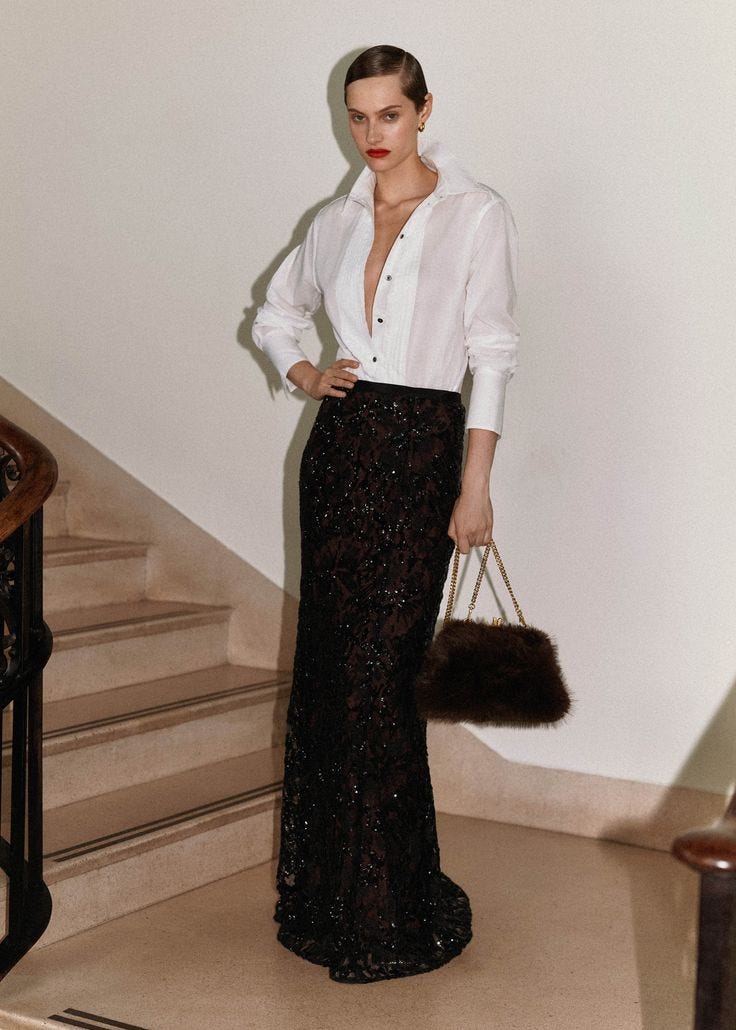
I know this might be controversial, but when I see black tie optional on an invitation, I dress for black tie.
Now, technically, the word optional does mean something. It tells guests that a formal evening gown is welcome but not required, and that an elevated cocktail dress or appropriately dressy separates can also be acceptable.
But personally? I would rather be among the more formally dressed guests than spend the evening wishing I had worn something more elevated.
I also think we tend to underestimate how wonderful it feels to dress for an occasion that genuinely calls for it. How often do we have an excuse to wear the beautiful evening pieces in our wardrobes?
That doesn’t mean you need a ball gown. A sleek floor-length column dress, an elegant evening gown, or an exceptionally sophisticated cocktail look can all feel appropriate depending on the event.
My preference is usually a long, beautifully cut dress in an interesting fabric, with accessories that complement rather than compete with it.
The goal is elegance, not extravagance.
Where women get it wrong: Treating optional as permission to ignore the formality altogether. It gives you flexibility within formal dressing, not an invitation to arrive in business casual.
05. The Office Holiday Party With No Dress Code
My interpretation: Consider the room before you consider the outfit.
This might be the trickiest invitation of all, because it often provides no direction beyond a date, time, and location.
And yet, there’s usually more information available than you think.
Start with the venue. An afternoon celebration in the office calls for something very different from an evening dinner at a private club. Next, consider who’s hosting and who will be attending. Is this an intimate gathering with your immediate team, or a company-wide celebration with senior leadership and clients?
Finally, think about what you would normally wear in that professional environment, and consider how you can elevate it for the occasion.
For a daytime office gathering, that might mean beautiful trousers, a cashmere sweater, and a festive accessory. For an evening restaurant celebration, perhaps it’s a tailored suit with an interesting blouse, or a midi dress with elegant jewelry.
I don’t believe women need to dull their personal style simply because they’re attending an event with colleagues. But I do think context matters.
You can be interesting, fashionable, and entirely yourself while still respecting the professional environment.
In fact, I think the women who do this best are the ones who understand how to bring personality into their wardrobes without losing their sense of authority.
Where women get it wrong: Assuming that because the event takes place outside the office, the professional context no longer applies. The setting may be social, but the relationships are still professional.
When the Invitation Gives You Absolutely Nothing
Sometimes the invitation doesn’t include a dress code at all. No festive, no cocktail, not even the wonderfully unhelpful holiday chic.
In those moments, I rely on three questions.
Where is the event? A private dining room, someone’s living room, and a hotel ballroom all suggest different expectations. Consider the venue’s usual atmosphere, not just whether it is technically a restaurant or a home.
What time does it begin? Generally speaking, daytime celebrations lend themselves to more relaxed dressing, while evening events offer more opportunity for formal fabrics, interesting accessories, and elevated silhouettes.
Who’s hosting? A casual gathering among friends is different from a dinner hosted by your firm’s managing partner. The people and the purpose of the gathering should inform your interpretation.
And when all else fails, my preference is to be slightly overdressed rather than underdressed.
Not dramatically overdressed. I’m not suggesting a gown for a casual dinner party. But I would rather arrive looking as though I made a little extra effort than feel as though I didn’t quite rise to the occasion.
One Great Piece, Multiple Invitations
There’s another misconception about holiday dressing I’d love to retire: the idea that every event requires a different outfit.
It doesn’t.
In fact, one of the things I work on most with clients is teaching them how to use the same pieces in different ways, so their wardrobes support more occasions without requiring constant additions.
Take a beautiful pair of black tailored trousers. For a holiday casual gathering, perhaps you wear them with a cashmere sweater, a belt, and flat boots. For an office holiday dinner, you might pair those same trousers with a silk blouse, a structured jacket, and beautiful earrings. And for a cocktail party, they could become the foundation for a dramatic evening top, an elegant heel, and a small clutch.
The trousers haven’t changed. The styling has.
This is why I place so much emphasis on building a wardrobe with pieces that have purpose, but aren’t limited to one occasion.
When you understand what makes an outfit more or less formal, you gain the ability to adjust it rather than replace it.
And that, to me, is where personal style becomes genuinely useful.
The Best-Dressed Woman in the Room Isn’t Necessarily the Most Dressed Up
I want to leave you with one final thought.
A dress code should provide direction, not dictate your identity. It exists to help guests understand the occasion, but it shouldn’t require you to abandon your own sense of style in the process.
If you don’t love sequins, festive doesn’t mean you need to wear them. If dresses have never felt particularly authentic to you, cocktail doesn’t mean you suddenly need to become a dress person. And if an invitation leaves room for interpretation, you’re allowed to use your own judgment.
The goal isn’t to follow every rule perfectly. It’s to understand the expectations well enough that you can make a thoughtful decision about how you want to show up.
Because the best-dressed woman in the room isn’t necessarily wearing the most expensive dress, the highest heels, or the most elaborate outfit.
She’s the one who understood the occasion, interpreted it through her own personal style, and walked into the room without giving her outfit another thought.
And that is exactly how getting dressed should feel.
xx,
