


There is a particular kind of frustration that tends to send women shopping: the feeling that their wardrobe is somehow failing them. An important dinner appears on the calendar and nothing seems quite right. A work trip requires a few polished looks and suddenly the closet feels conspicuously unprepared. The weather changes, the season turns, or life itself shifts, and what was once an easy wardrobe begins to feel strangely inadequate.
The natural response is to look for something new.
After all, shopping provides an immediate sense of possibility. A new dress can solve the problem of Friday night. A new blazer can make Monday morning feel more put together. A new pair of shoes can seem like the missing piece that will finally make everything else in the closet work. The trouble is that the purchase often addresses the moment rather than the wardrobe.
This is where I see women get caught in a cycle of reactive shopping. A particular need arises, they buy the thing that seems to solve it, and then they return to the closet a few weeks later with the same vague sense of dissatisfaction. The wardrobe gets larger without becoming meaningfully more useful.
The important question, then, is not simply whether you need something new. It is whether you have identified what your wardrobe is actually missing.
A Wardrobe Gap Is Not the Same as Wardrobe Frustration
A genuine wardrobe gap is fairly specific. Your life requires something that you do not currently own, and the absence of that piece is creating a practical problem.
Perhaps your role has changed and you now spend considerably more time in executive meetings. Perhaps you have begun traveling frequently for work and need clothing that can move between the airport, a client dinner and a full day of meetings without requiring an entirely separate suitcase. Perhaps your social calendar has evolved and you suddenly find yourself attending more weddings, fundraisers or formal dinners than you did a few years ago.
Those are wardrobe gaps. There is a clear relationship between the demands of your life and the thing that is missing from your closet.
The more complicated situation is when you feel as though you need something but cannot articulate what it is. This often shows up as the familiar complaint that there is “nothing to wear” despite having a closet full of clothes. In my experience, that feeling is rarely solved by adding another isolated piece.
It may be that your wardrobe was built around a previous version of your life. It may be that you have accumulated beautiful individual pieces without enough consideration for how they work together. It may be that your proportions, preferences or personal style have evolved, leaving you surrounded by clothes that technically fit but no longer feel particularly relevant. Or it may simply be that you have not developed enough formulas for the situations you regularly find yourself dressing for.
In each case, the impulse is the same: I need something.
The solution is not necessarily the same. That distinction is one of the most important things I want clients to understand about shopping. A wardrobe can have a purchasing problem, but it can also have a styling problem, a proportion problem, an editing problem or a functionality problem. Buying more clothing is only useful when the problem actually requires more clothing.
The Most Useful Question to Ask Before You Shop
When a wardrobe feels inadequate, I recommend starting with the calendar rather than the closet.
Look at the life you are dressing for now. What do you actually have coming up over the next three to six months? How many days are spent in the office? How often are you traveling? What kinds of dinners and events are you attending? Has your professional role changed? Has your social life changed? Are you spending more or less time in your home city? Are there parts of your wardrobe you are consistently avoiding?
Then ask a much more specific question: What, exactly, am I unable to get dressed for?
That question tends to separate the genuine need from the general feeling of wanting something new.
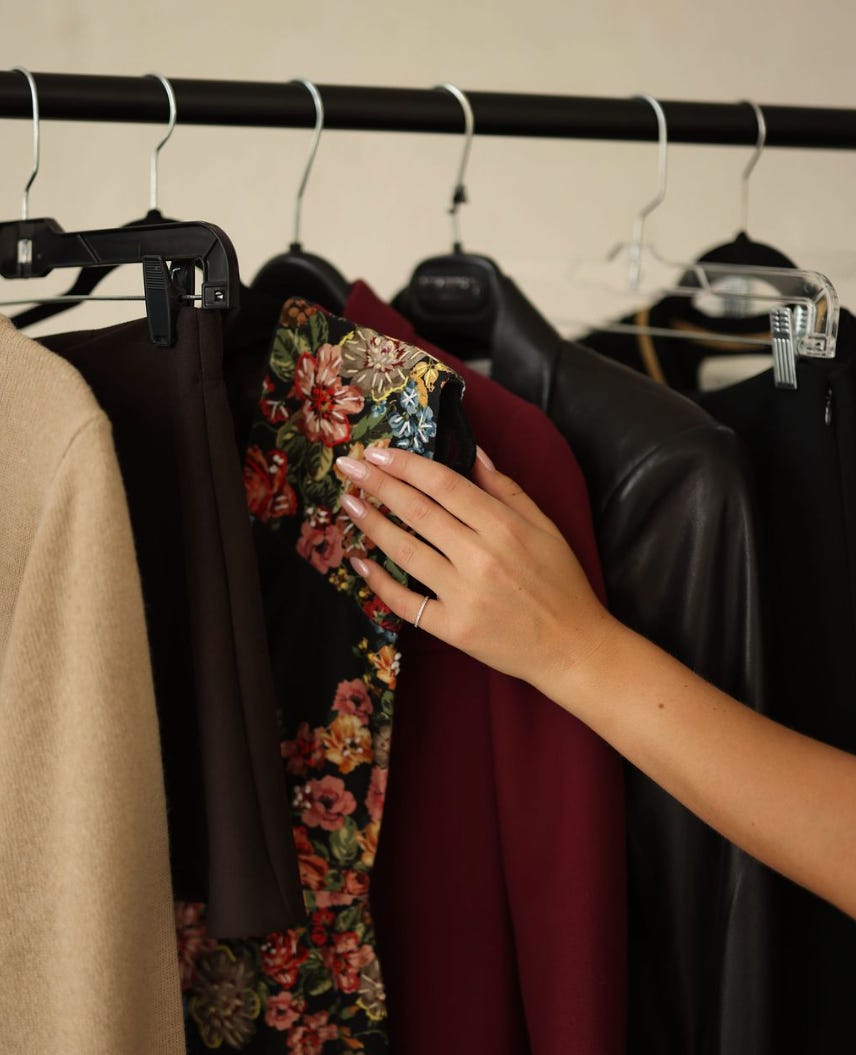
If you have an upcoming black-tie event and nothing in your wardrobe meets the dress code, you have a clear need. If you own several dresses that technically work but none feel appropriate for the woman you are now, the issue may be that your wardrobe has not evolved with your style. If you own the right clothes but continually struggle to put them together, you may not need another purchase at all. You may need better outfit formulas.
This is also why I don’t recommend waiting until you are frustrated to assess your wardrobe. By the time you are standing in a fitting room with a specific event three days away, you have already narrowed your options and increased the pressure to find something.
That is a difficult environment in which to make a thoughtful purchase.
Shopping Works Better as Part of a Wardrobe Strategy
I think about wardrobe shopping much the way I think about maintaining anything valuable: it works best when you are paying attention before there is a crisis.
This does not mean buying an entirely new wardrobe at the beginning of every season. In fact, I would argue for almost the opposite. The more intentional the wardrobe, the less frequently you should feel compelled to make large, indiscriminate purchases. What you need is a rhythm for assessing the wardrobe before a problem becomes urgent.
For most women, four points throughout the year provide enough structure without turning the wardrobe into another project to manage. Here is your annual guide & strategy:
The Point Is Not to Stop Shopping
There is a tendency to talk about intentional shopping as though the goal is simply to buy less. I think that misses the more interesting point.
The goal is to make shopping purposeful enough that you can stop thinking about it all the time.
When you know your wardrobe well, you do not have to respond to every change in season, every invitation or every moment of dissatisfaction by asking what you should buy. You have a framework for determining whether something is genuinely missing, whether something needs replacing, or whether the problem lies somewhere else.
That changes the experience of shopping entirely.
You can walk into a store knowing that you are looking for a particular trouser rather than hoping something will tell you what your wardrobe needs. You can see a beautiful new collection without feeling compelled to participate in it. You can recognize that the piece you are tempted by is lovely, but doesn’t have a meaningful role in your life.
And when you do find the right thing, you can buy it with confidence because you already know where it belongs.
That, to me, is the real luxury of a considered wardrobe. Not having unlimited options, and certainly not never wanting anything new. It is knowing that your wardrobe has been thought through well enough that it does not require your constant attention.
Your clothes are there to support your life. They should make getting dressed easier, not become another thing you have to manage.
The less mental energy you spend wondering what you need to buy, the more of it you have available for everything else that matters.
xx,
